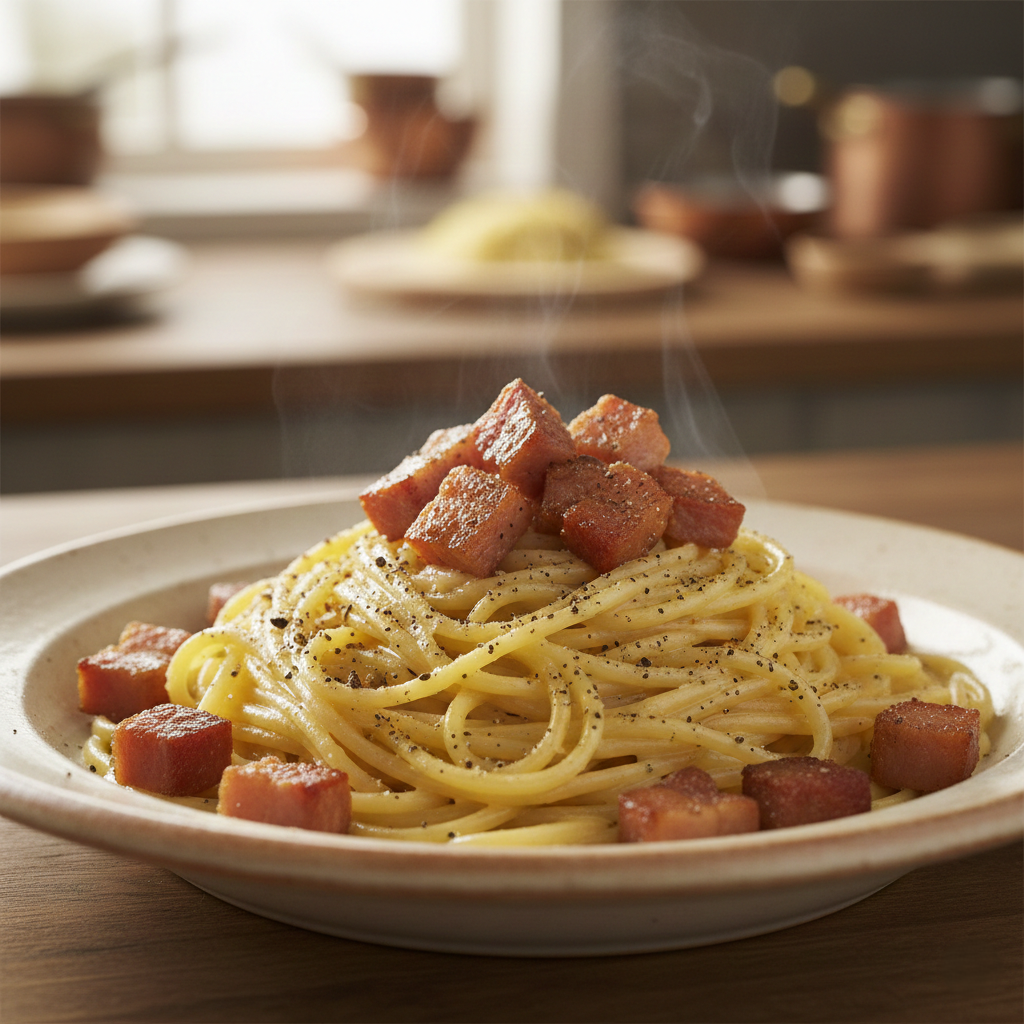
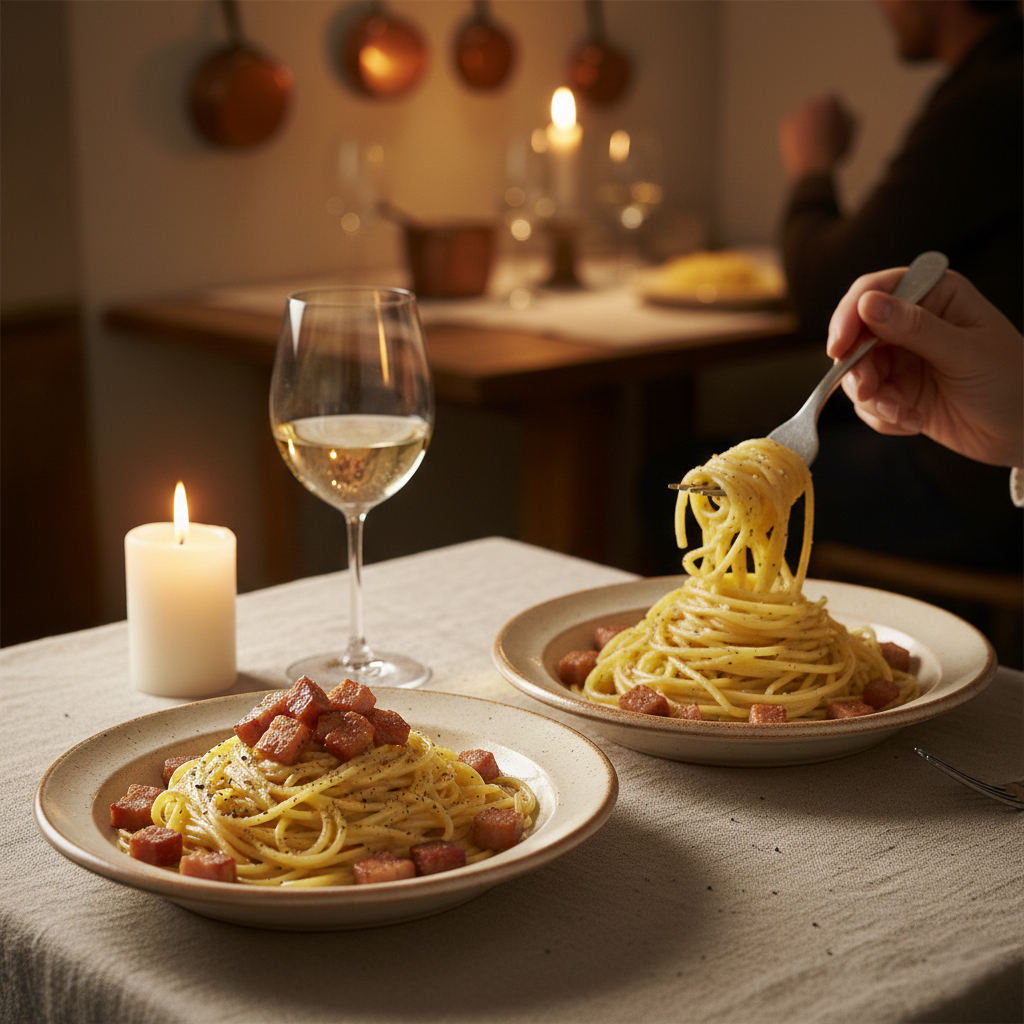
Imagine a bowl of pasta so glistening, so creamy, and so deeply savory that you can’t help but close your eyes after the first bite. The sauce coats every strand of spaghetti like liquid gold, rich with the sharpness of aged cheese and the silken luxury of fresh eggs. Punctuating this velvet texture are crispy, salty nuggets of cured pork and the bold, spicy bite of freshly cracked black pepper.
This is Carbonara.
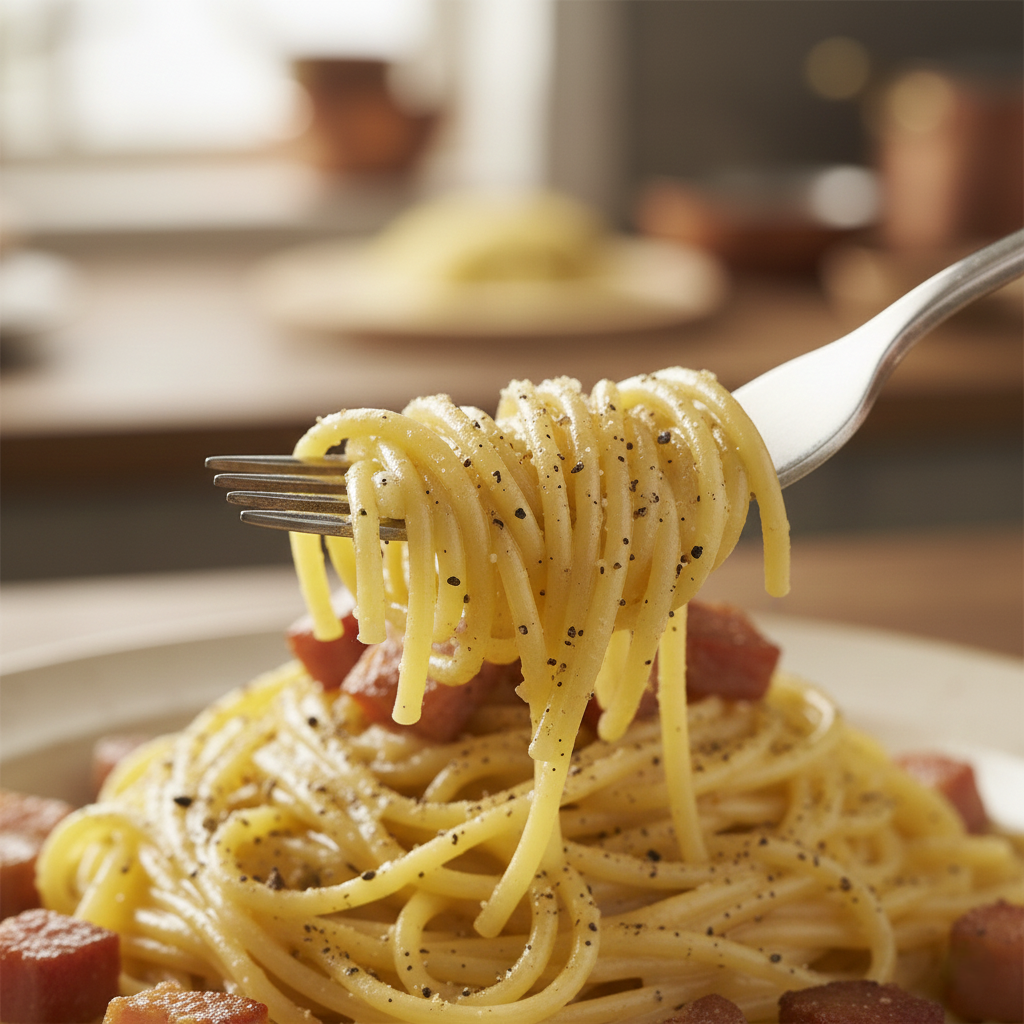
But here is the secret that shocks most beginners: there is absolutely no cream in this dish. Not a drop. The magic lies in the chemistry between egg yolks, cheese, pasta water, and rendered fat. It is a balancing act of temperature and timing, a culinary dance that results in one of the most comforting, high-protein meals you will ever eat.
Before we light the stove, we must understand where this dish comes from. Carbonara is one of the four famous pastas of Rome (alongside Cacio e Pepe, Amatriciana, and Pasta alla Gricia).
The origins are shrouded in a bit of delicious mystery. Some historians believe the name comes from the Carbonari, the charcoal burners of the Apennine Mountains, who needed a hearty, high-energy meal that could be made with preserved ingredients that didn’t spoil easily (cured pork, hard cheese, pasta). The generous dusting of black pepper on top is said to resemble coal dust.
Others argue for the “American Soldier” theory. Legend has it that during the liberation of Rome in World War II, American GIs brought their rations of bacon and powdered eggs to local trattorias, asking Italian chefs to make them a meal. The chefs, with their innate genius, combined these ingredients with local pasta to create the precursor to the modern legend.
Regardless of its birth, Carbonara connects us to the Italian philosophy of cooking: poverty and nobility. It uses humble ingredients to create a dish fit for a king. When you make this, you aren’t just making dinner; you are participating in a Roman ritual that celebrates the beauty of simplicity.
Why should you master this specific dish?
Beyond the taste, there is immense value in learning this recipe.
We are going to make this the traditional way. No garlic, no onions, no parsley, and definitely no heavy cream. Just five ingredients and a little bit of physics.
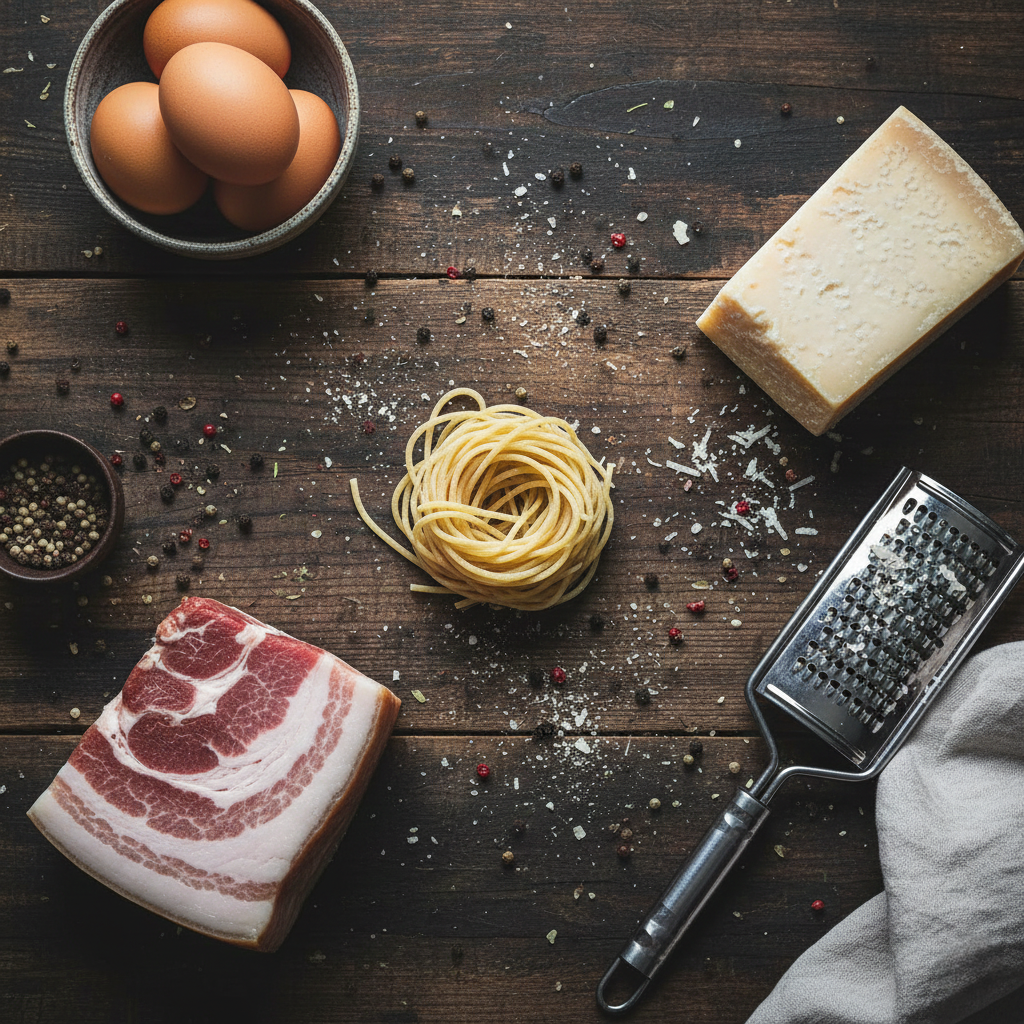
In your mixing bowl, whisk together the whole eggs and the extra yolk. Add the grated Pecorino and Parmigiano (save a little distinct pile for garnish later). Add a generous amount of cracked black pepper. Whisk this mixture until it forms a thick, yellow paste. Set it aside.
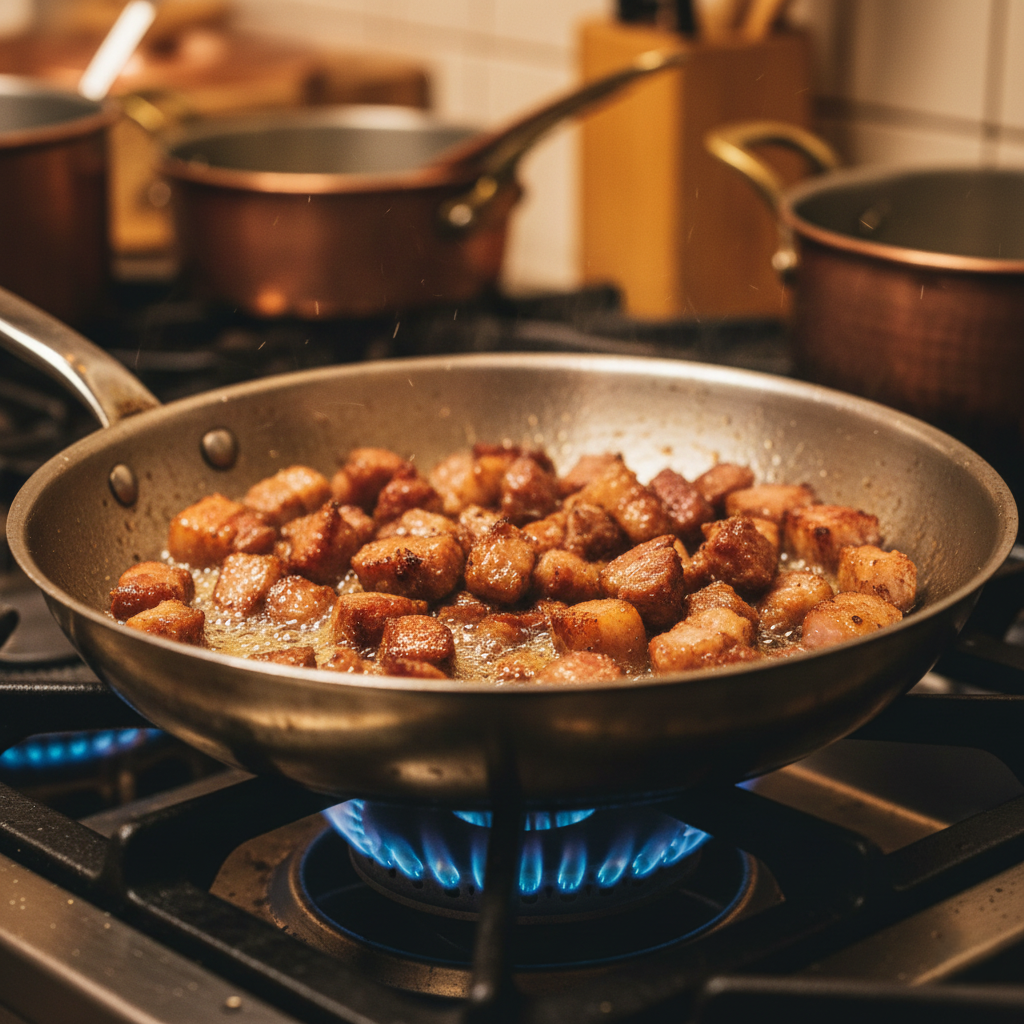
Cut your Guanciale (or pancetta) into small strips or cubes (lardons), about 1cm thick. Place them in a cold skillet and turn the heat to medium-low.
Bring a large pot of water to a boil. Salt it, but use less salt than you normally would (maybe half a tablespoon).
While the pasta cooks, scoop out about 1 cup of the starchy, cloudy boiling water.
This step happens off the heat. I repeat: OFF THE HEAT.
Stir the crispy Guanciale back into the pasta.
Twirl the pasta into warm bowls. Top with the remaining grated cheese and another aggressive crack of black pepper. Serve immediately. This dish waits for no one.
1. Can I make this vegetarian? Traditionally, the pork fat is key. However, you can make a “vegetarian carbonara” by using smoked mozzarella or zucchini fried in olive oil to mimic the texture. It won’t be authentic, but it will still be delicious.
2. Can I store and reheat leftovers? This is a tricky one. Carbonara is best eaten immediately. If you reheat it in the microwave, the eggs will scramble and the oil will separate. If you must reheat it, do so in a skillet over very low heat with a splash of water, stirring constantly to try and bring the emulsion back together?
3. Why did my sauce split and become oily? This usually happens if there wasn’t enough starchy water added, or if the cheese got too hot too fast. You can sometimes save it by adding another splash of hot water and whisking vigorously?
4. Can I use garlic? In Rome, adding garlic to Carbonara is considered a crime! However, if you love garlic, you can smash a clove, fry it with the Guanciale to infuse the oil, and then remove the clove before adding the pasta. Just don’t tell an Italian grandmother?
5. Is it safe to eat “raw” eggs? The eggs are not actually raw. The residual heat from the boiling pasta and the hot fat cooks the eggs to a safe temperature (usually around 160°F/71°C) without solidifying them into hard curds. It creates a custard-like consistency?
Mastering Pasta Carbonara is a rite of passage for any home cook. It teaches you to trust your instincts, to manage heat, and to appreciate the alchemy of simple ingredients.
When you sit down with that steaming bowl, smelling the sharp Pecorino and the savory cured pork, you aren’t just eating dinner. You are experiencing a piece of Roman culture that has survived wars and changing times.
So, grab your whisk, find the best eggs you can, and make tonight a Roman holiday. Buon appetito!