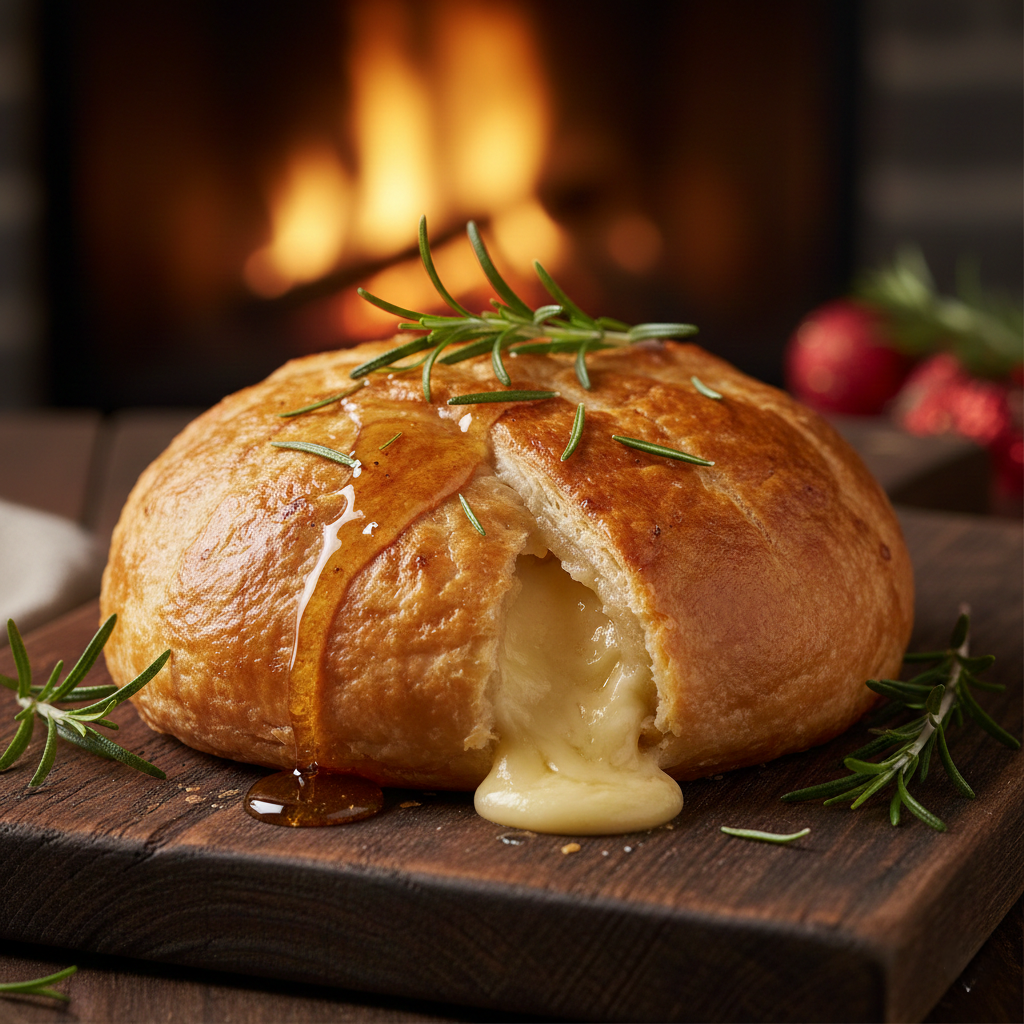
There is a moment of pure magic that happens when a knife slices through layers of golden, flaky pastry and meets a wheel of warm cheese. The crust crackles audibly, giving way to a molten, lava-like flow of creaminess that spreads across the board. The aroma hits you instantly—buttery dough, toasted nuts, and the earthy richness of warm dairy.
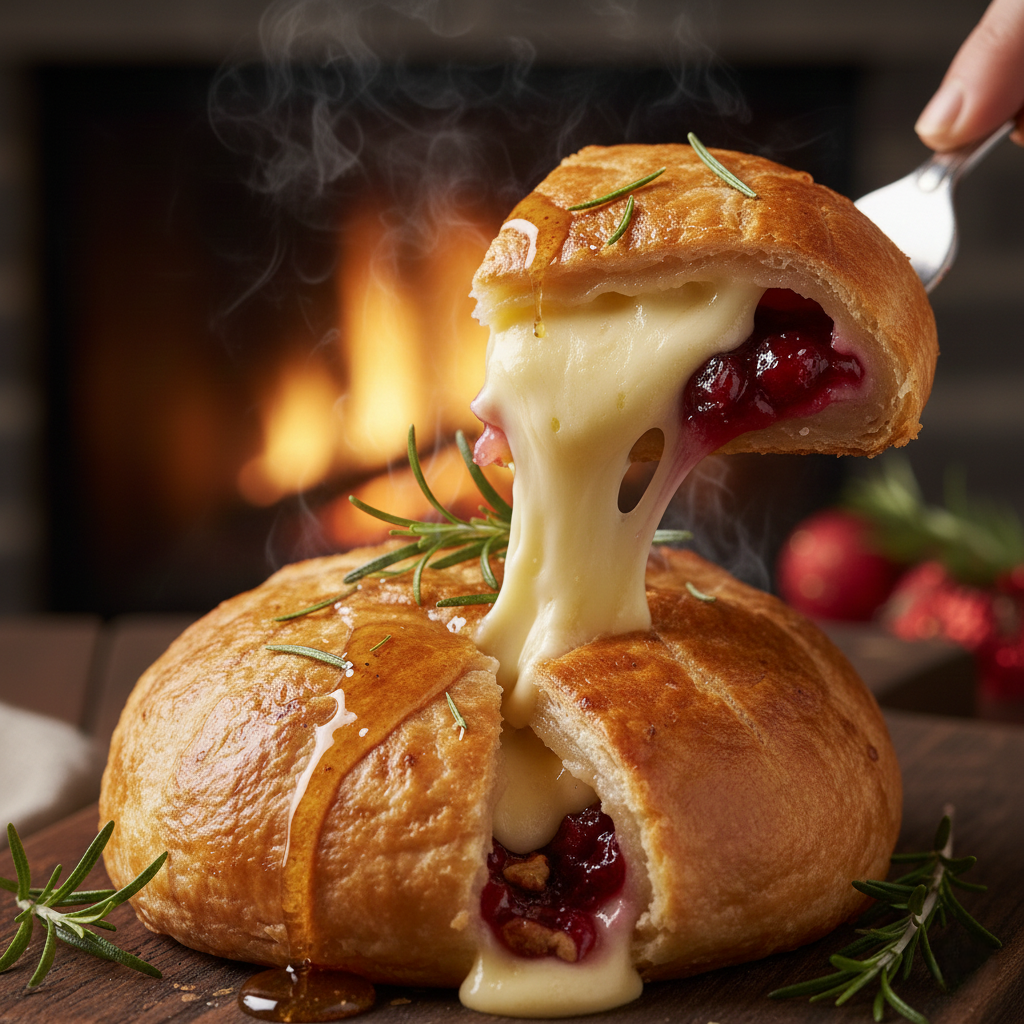
This is Baked Brie en Croûte, an elegant classic centerpiece that looks like it took hours of professional pastry work but is actually one of the most forgiving and rewarding dishes you can create in your home kitchen. “En croûte” is simply French for “in a crust,” and it transforms a standard wheel of grocery store cheese into a luxurious gastronomic event.
Today, we are elevating the savory richness of Brie with the tart brightness of cranberry sauce, the earthy crunch of pecans, and the aromatic whisper of fresh rosemary. Whether you are hosting a holiday gathering, a sophisticated dinner party, or simply treating yourself to a night of indulgence, this guide will walk you through every step to ensure perfection.
Why should you make this? Because in the world of entertaining, few dishes offer such a high return on investment. You spend fifteen minutes on preparation, and the oven does the rest.
However, the true motivation goes beyond convenience. It is about the “Wow Factor.” When you place this golden dome on the table, it commands attention. It signals to your guests that they are worth the effort. It creates a communal eating experience; people naturally gather around warm cheese, tearing off chunks of bread and dipping into the communal pot of gold. It breaks the ice and starts conversations.
Furthermore, this particular flavor profile—Cranberry and Pecan—is a masterclass in balance. Brie is incredibly rich and fatty (in the best way possible). To cut through that richness, you need acid and sweetness, which the cranberry provides. The pecans add necessary texture so that every bite isn’t just soft-on-soft, and the rosemary provides a herbal top note that prevents the dish from becoming a dessert.
By mastering this dish, you aren’t just melting cheese; you are learning the fundamentals of working with laminated doughs. Puff pastry can be intimidating because it relies on hundreds of layers of butter and flour rising via steam. In this guide, you will learn:
Economically, this dish is a winner. A high-end restaurant might charge a premium for a cheese board half this size. Making it at home allows you to use high-quality ingredients for a fraction of the price.
Brie has been known as the “Queen of Cheeses” since the Middle Ages. Legend has it that the French Emperor Charlemagne tasted it at a monastery in the 8th century and instantly fell in love with its creamy texture. By wrapping it in pastry, we are nodding to the classic French tradition of Beef Wellington or Pâté en Croûte, where dough was originally used to preserve the moisture and flavor of the contents inside during long cooking times.
But beyond French royalty, this dish connects us to the modern tradition of the “Holiday Appetizer.” It evokes memories of Thanksgiving spreads, Christmas Eve gatherings, and New Year’s toasts. It is the kind of food that anchors a room, pulling people away from their phones and towards the warmth of the kitchen.
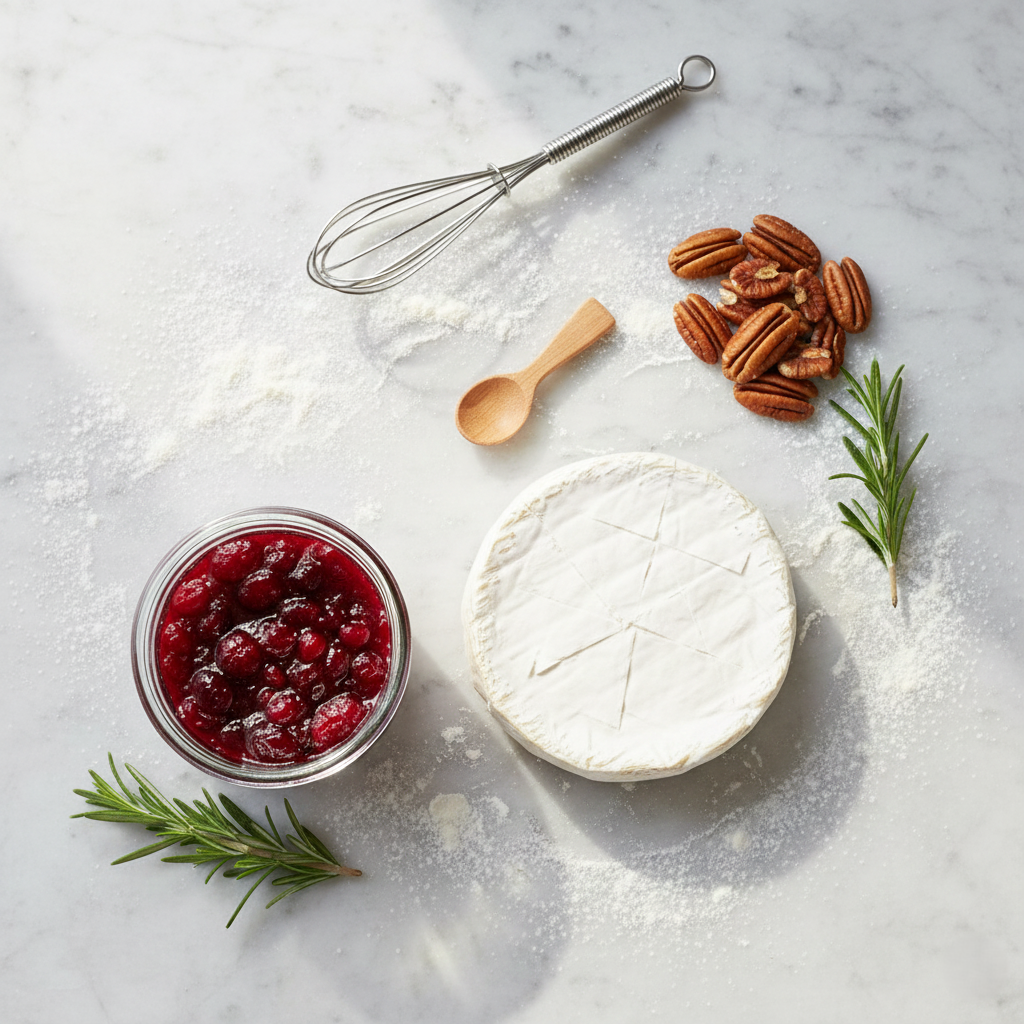
To create this masterpiece, you need quality ingredients. Since there are so few components, make sure each one counts.
The Core:
The Flavor Profile:
The Finish:
Preheat your oven to 400°F (200°C). This high heat is crucial because it creates the steam needed to puff the pastry layers before the butter melts out. Line your baking sheet with parchment paper.
While the oven heats, place your chopped pecans in a dry pan over medium heat for 2-3 minutes. Shake the pan frequently. You want them to smell fragrant and look slightly darker. Toasting releases the oils in the nuts, making them crunchier and more flavorful. Set them aside to cool.
Lightly flour your clean kitchen counter or a cutting board. Unfold your thawed puff pastry. Using your rolling pin, gently roll it out just enough to smooth the creases. You don’t want it paper-thin; you want a sturdy vessel for the cheese. Aim for a square roughly 10-12 inches wide.
Place the wheel of Brie in the direct center of the pastry.
This is the artistic part. You need to wrap the cheese completely.
Optional Decorative Touch: If you have excess dough that you trimmed off, use cookie cutters to make leaves or stars and stick them onto the bundle using a drop of water.
Move the wrapped brie onto your parchment-lined baking sheet. Using your pastry brush, coat the entire surface of the dough with the egg wash. This step is non-negotiable! It acts as a glue for the pleats and creates that appetizing, deep golden-brown color. Without it, your pastry will look pale and dry.
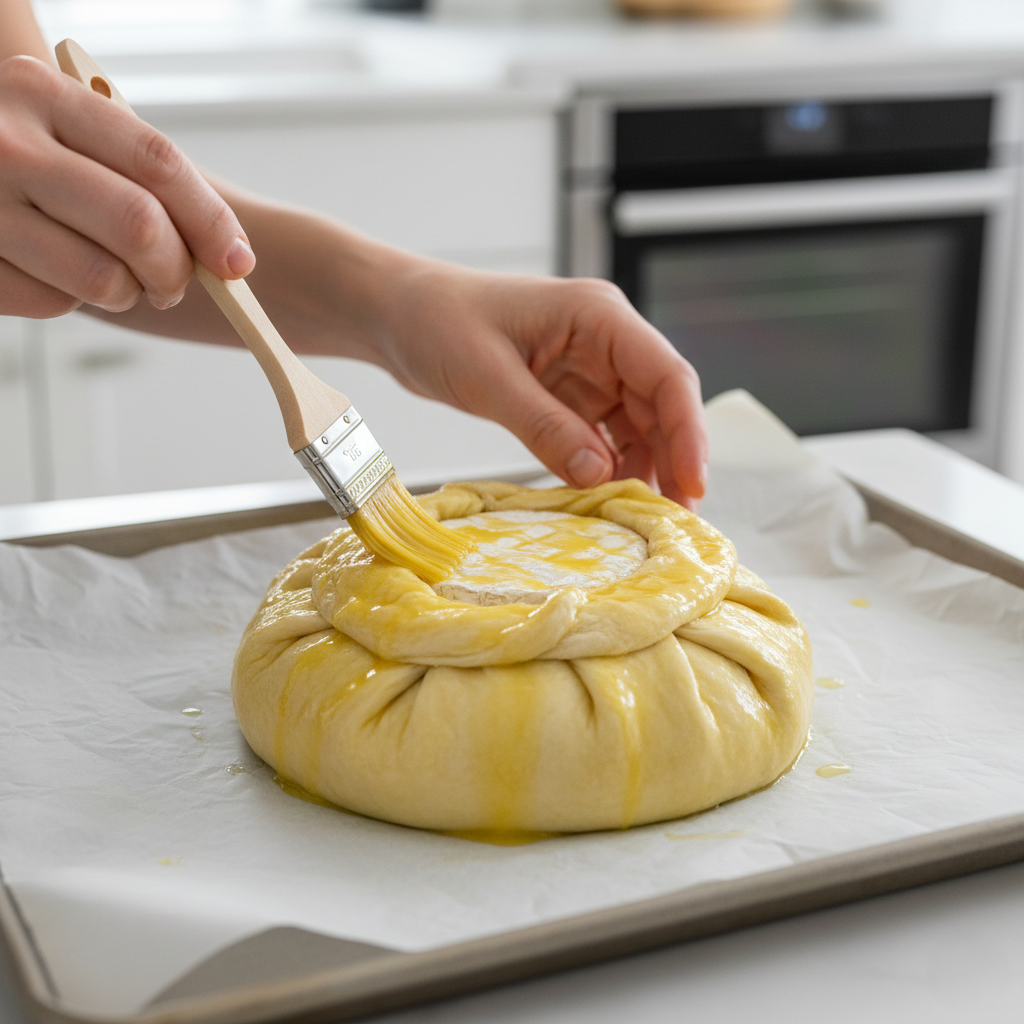
Place the baking sheet in the center rack of the oven. Bake for 20 to 25 minutes.
Remove the brie from the oven. Let it rest for at least 5 to 10 minutes.
Serve your Baked Brie en Croûte on a wooden board or a slate platter. Surround it with vehicles for scooping:
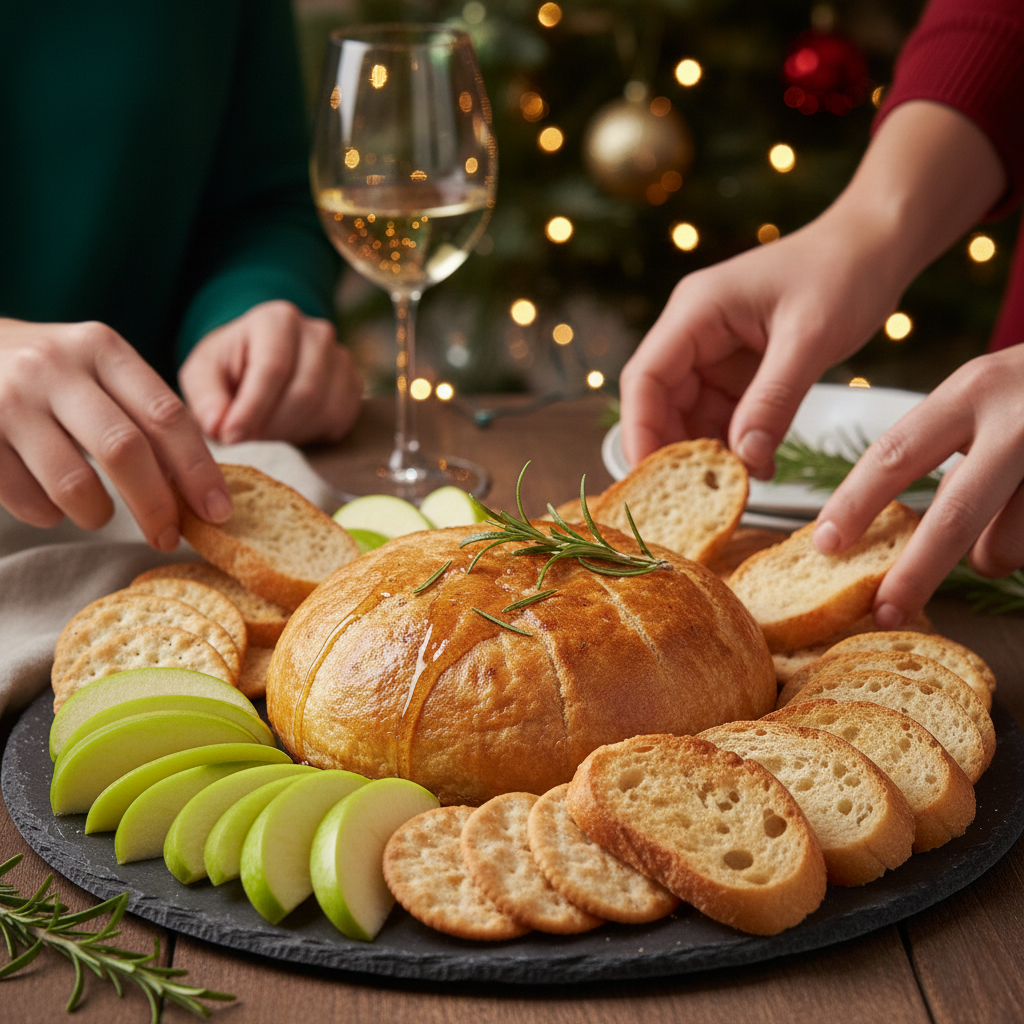
1. Can I prepare this ahead of time? Yes! This is the best part. You can assemble the brie, wrap it in dough, and keep it in the refrigerator for up to 24 hours before baking. Just brush with egg wash right before it goes into the oven.
2. What happens if I accidentally poke a hole in the pastry? Don’t panic. Take a small scrap of leftover dough, patch the hole, and smooth it over with your finger and a little water. The egg wash will hide the seam.
3. Can I use a wedge of Brie instead of a wheel? It is risky. A wedge has exposed sides (no rind), which means the cheese will melt much faster and likely leak out before the pastry is cooked. If you must use a wedge, freeze it for 20 minutes before wrapping to slow down the melting process.
4. How do I store leftovers? If you have leftovers (which is rare!), store them in an airtight container in the fridge for up to 3 days.
5. How do I reheat the leftovers? Do not use the microwave; it will make the pastry soggy and chewy. Place the leftover piece on a baking sheet and warm it in a 350°F (175°C) oven for about 10-15 minutes until the pastry crisps up again.
6. Is the rind really edible? Absolutely. The rind is a white mold (Penicillium camemberti) that is completely safe and delicious. It has a mushroom-like flavor that complements the creamy interior. Removing it makes the baking process very messy.
There you have it—a dish that looks like it belongs in a French patisserie window but was born in your own oven. The Baked Brie en Croûte with Cranberry and Pecan is more than just an appetizer; it is an experience. It combines the rustic comfort of warm bread and cheese with the elegance of fine dining.
So, the next time you want to treat someone (or yourself), grab that wheel of cheese and a sheet of pastry. Watch the magic happen in the oven, and enjoy the silence that falls over the room when everyone takes that first, perfect bite.
Happy Cooking!