The King of Steaks: Mastering Authentic Bistecca alla Fiorentina
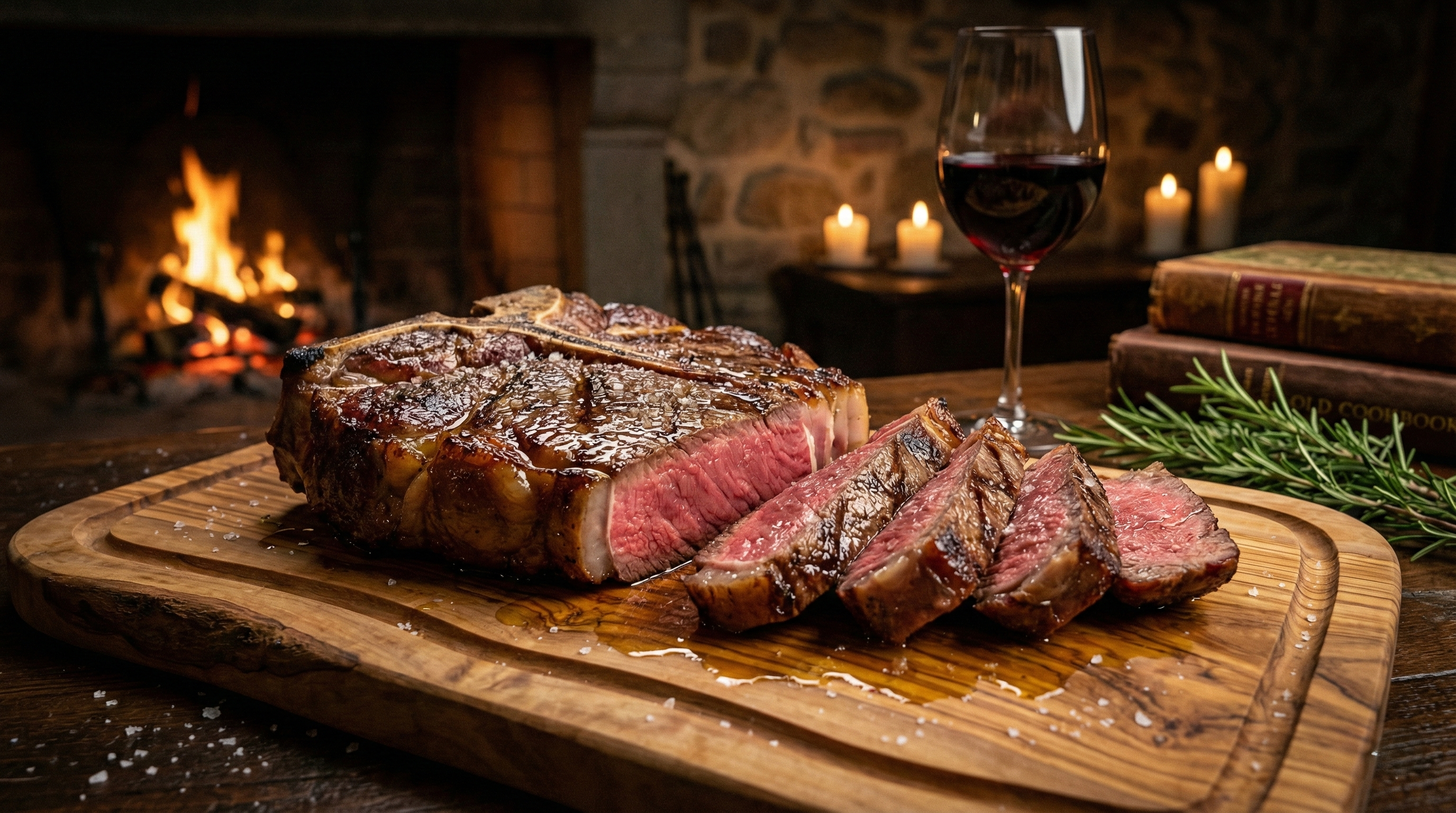
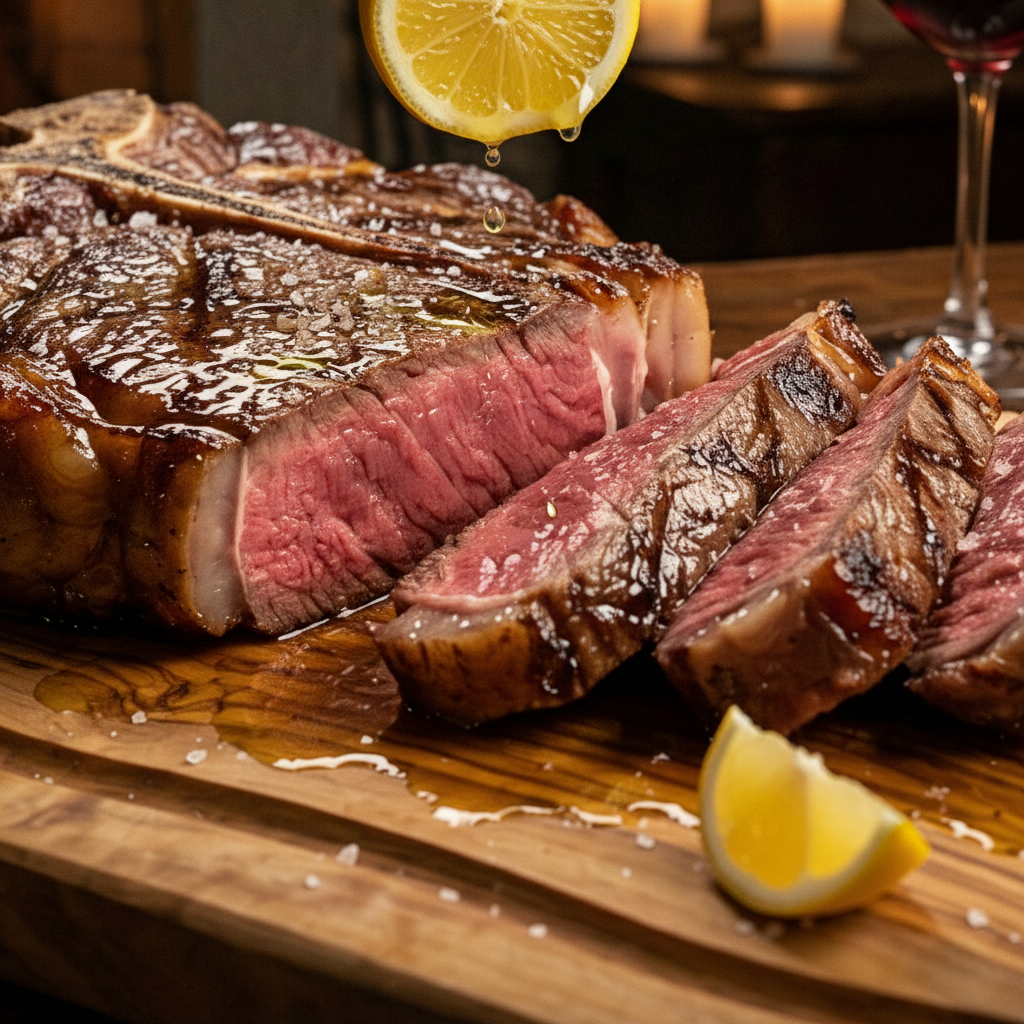
A close-up of the finished dish, ready to be served.
Imagine a piece of meat so impressive, so primal, and so perfectly executed that it doesn’t just feed you—it transports you. You are no longer in your kitchen; you are sitting at a rough-hewn wooden table in the rolling hills of Tuscany. The air smells of wood smoke and rosemary, and before you sits the Holy Grail of beef: the Bistecca alla Fiorentina.
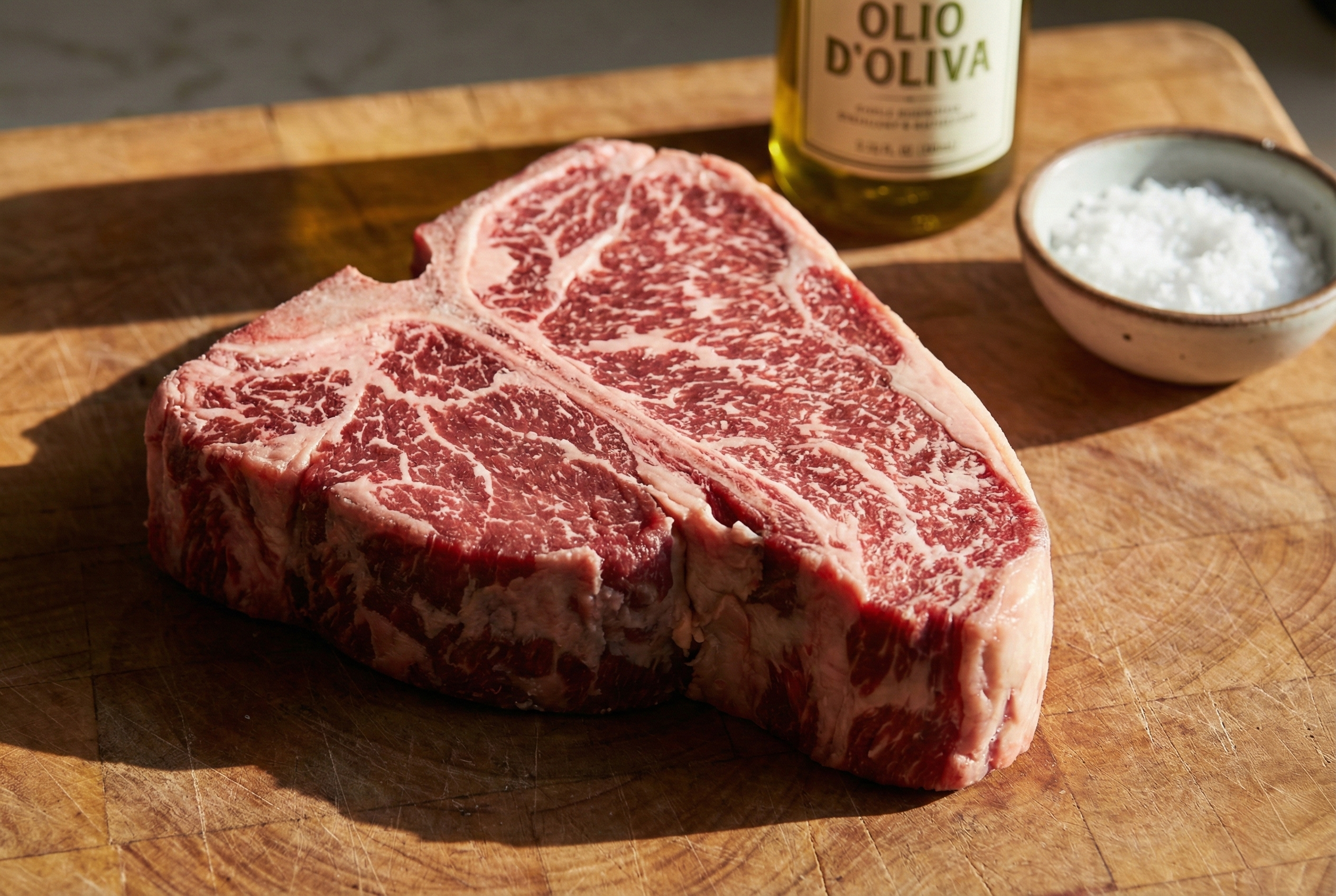
This isn’t just a steak. It is a monument to carnivorous pleasure. It is a thick-cut, flame-kissed masterpiece that celebrates the purity of high-quality ingredients. The crust is salty, charred, and smoky, shattering under your knife to reveal a velvety, crimson interior that melts on your tongue like butter.
If you have been looking for the ultimate special occasion dish—one that demands attention and rewards you with the most intense beef flavor imaginable—you have arrived. Put on your apron and sharpen your knife. We are going to Florence.
Why You Must Experience This
Why cook a Bistecca alla Fiorentina? Because it redefines what a steak dinner can be. In a world of over-complicated sauces and foams, this dish is a confident declaration that less is more.
The motivation here is the “Crave Factor.” There is something deeply satisfying about conquering a massive cut of meat. It appeals to our hunter-gatherer instincts, yet it feels incredibly sophisticated. This is the perfect centerpiece for a dinner party where you want to shock and awe your guests without spending four hours chopping vegetables. It is high-protein indulgence at its finest. When you slice into this steak, revealing the gradient from dark char to warm red center, you aren’t just serving dinner; you are performing culinary theater.
A Tuscan Love Affair
To understand the Bistecca, you must understand its roots. This dish is the beating heart of Florence (Firenze). Historically, this steak comes from the Chianina cattle—an ancient breed of white giants raised in the Valdichiana valley. They are known for their massive size and lean, flavorful meat.
The legend goes that during the feast of Saint Lawrence in the time of the Medici family, bonfires were lit across Florence, and large amounts of veal were roasted and distributed to the people. English travelers in the crowd would shout for “beef steak!” which the Florentines adopted as “bistecca.”
When you cook this, you are connecting to centuries of Italian tradition. It evokes the spirit of the trattoria—loud laughter, clinking glasses of Chianti, and the joy of sharing food from a communal platter. It is a reminder that food is meant to be shared, torn into, and savored with people you love.
Science, Skill, and Nutrition
Beyond the romance, there is immense practical value in mastering this recipe.
The Culinary Technique
Learning to cook a Bistecca teaches you the most critical skill in a meat-eater’s arsenal: Heat Management. You will learn about the Maillard Reaction—a chemical reaction between amino acids and reducing sugars that gives browned food its distinctive flavor. You will learn the importance of tempering meat (bringing it to room temperature) and the art of “carry-over cooking” during the resting phase. These are skills that will improve every single protein you cook for the rest of your life.
The Nutritional Profile
While this is an indulgent “cheat meal” in terms of portion size, it is fundamentally clean fuel.
- High Protein: Essential for muscle repair and satiety.
- Iron & Zinc: Red meat is one of the most bioavailable sources of these minerals, crucial for energy levels and immune health.
- Healthy Fats: When using grass-fed beef and high-quality Extra Virgin Olive Oil (EVOO), you are consuming healthy lipids that fuel your brain.
The Foolproof Guide
This is where the magic happens. Do not be intimidated by the size of the meat. If you follow these instructions, you cannot fail.
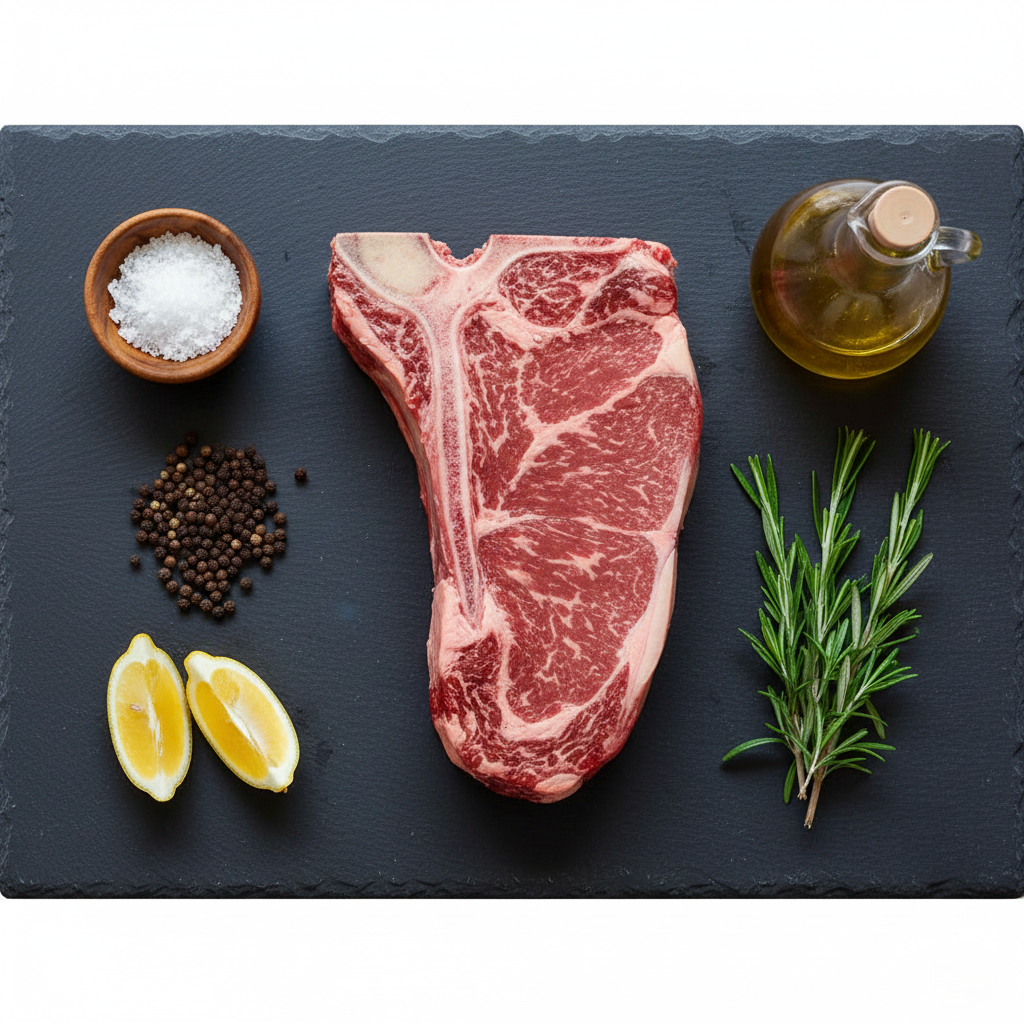
Ingredients
- The Steak: 1 Large Porterhouse or T-Bone Steak.
- Note: It must be at least 3 inches (approx. 7-8 cm) thick. It should weigh between 1kg to 1.5kg (2.2 - 3.3 lbs).
- The Fat: 2-3 tbsp High-Quality Extra Virgin Olive Oil (Tuscan if possible).
- The Seasoning: Sea Salt Flakes (Maldon or Fleur de Sel are best).
- The Spice: Freshly cracked Black Pepper (coarse grind).
- The Acid: 1 Lemon, cut into wedges (optional, but adds a brilliant zest).
- Optional Aromatics: A sprig of fresh rosemary or sage (for brushing).
Equipment Needed
- Heat Source: A charcoal grill (preferred for authenticity) OR a heavy Cast Iron Skillet / Griddle pan.
- Tools: Long metal tongs (never use a fork to turn the meat; piercing it releases the juices!).
- Measurement: An instant-read meat thermometer.
- Serving: A heavy wooden cutting board and a sharp carving knife.
Step-by-Step Instructions
Phase 1: Preparation (The Most Important Step)
- The Temper: Remove your steak from the refrigerator at least 2 to 3 hours before cooking. This is non-negotiable. If the center of the steak is cold, the outside will burn before the inside is cooked. The meat should be completely room temperature.
- The Dry: Pat the steak dry with paper towels. Moisture is the enemy of the crust. If the meat is wet, it steams instead of searing.
- No Salt Yet: Do not salt the meat until right before it hits the heat. Salt draws out moisture, which we want to keep inside the muscle fibers for now.
Phase 2: The Fire
- Heat it Up:
- Grill: Build a very hot charcoal fire. You want white-hot coals.
- Stove: Place your cast iron skillet over high heat for 5-7 minutes until it is lightly smoking.
- The Seasoning: Just seconds before cooking, rub the steak lightly with a drop of olive oil, then generously coat all sides (including the edges) with sea salt and coarse black pepper. Press the seasoning into the meat.
Phase 3: The Sear
- The Sizzle: Lay the steak onto the grill or skillet. You should hear a violent, aggressive hiss. Do not touch it! Let the crust form.
- The Timing: Cook for roughly 5 to 6 minutes on the first side. You are looking for a deep, dark brown char—almost black in spots.
- The Flip: Flip the steak using your tongs. Cook for another 4 to 5 minutes on the second side.
- The Stand (Vertical Cooking): This is the signature move of the Fiorentina. Stand the steak upright on the T-bone. The bone acts as a heat conductor, cooking the meat from the inside out near the bone. Balance it there for roughly 2 to 3 minutes.
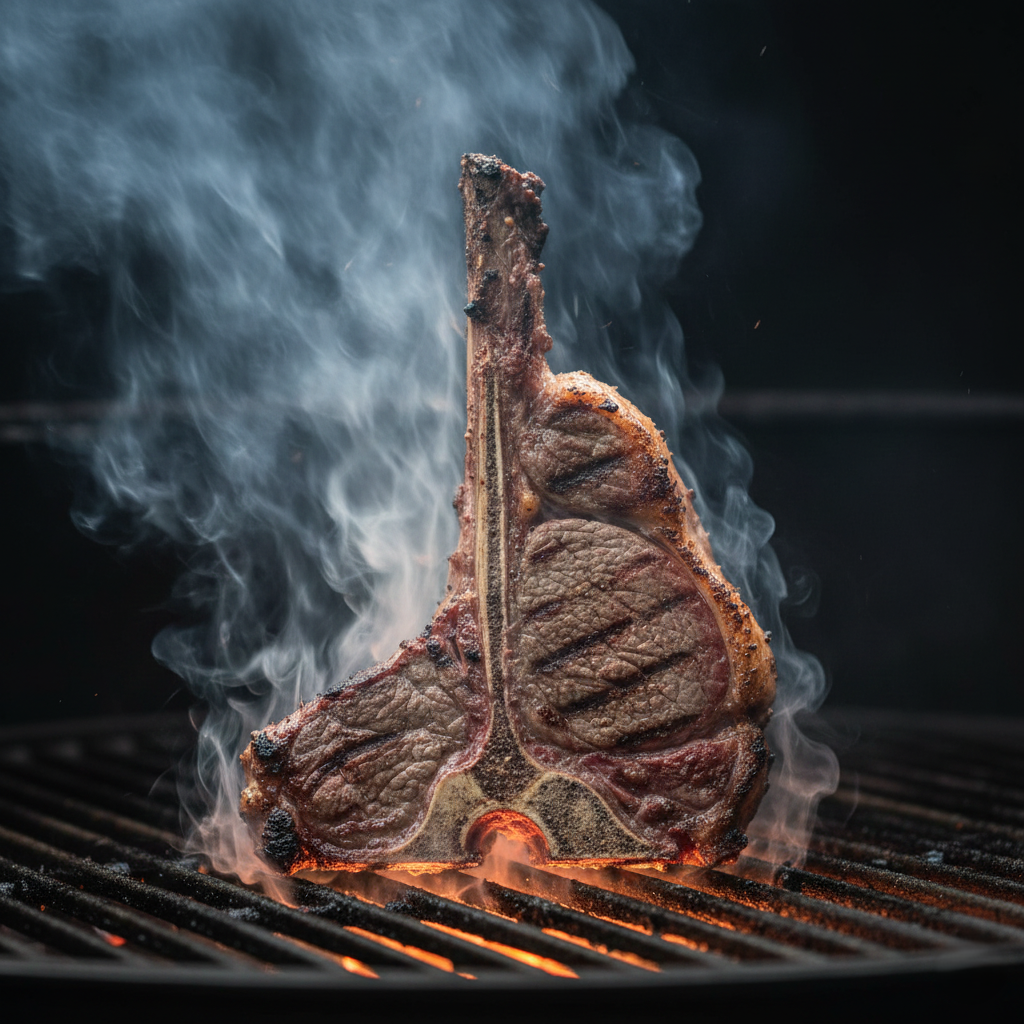
Phase 4: The Rest & Serve
- Check Temp: For a true Florentine experience, the steak must be Rare or Medium-Rare.
- Rare: 120°F - 125°F (49°C - 52°C)
- Medium-Rare: 130°F (54°C)
- Note: The temperature will rise about 5 degrees while resting.
- The Rest: Transfer the meat to a wooden board (preferably one with a groove to catch juices). Let it rest for 10 minutes. This allows the juices to redistribute throughout the steak. If you cut it now, the juices will bleed out, and the meat will be dry.
- The Carve: Cut the meat away from the bone in two large pieces (the sirloin and the filet). Slice the meat against the grain into thick strips (about 1 inch wide).
- The Finish: Arrange the slices back near the bone. Drizzle generously with your best Extra Virgin Olive Oil. Sprinkle with a little more sea salt. Squeeze a fresh lemon wedge over the top for a bright, acidic “pop” that cuts through the richness.
Chef’s Tips for Success
- The Oil Bath: If you are using rosemary, tie the sprigs together to make a little “brush.” Dip it in olive oil and brush the cooked steak just before serving. The heat of the meat will release the herb oils.
- The Doneness Debate: In Tuscany, asking for a steak “well done” is considered a crime. The thickness of the cut makes it nearly impossible to cook well-done without burning the outside to a crisp. Embrace the al sangue (bloody) style!
- The Bone: Don’t throw the bone away! There is usually plenty of delicious meat left attached to it. In Italy, gnawing on the bone is considered the best part of the meal.
Frequently Asked Questions
1. Can I make this if I don’t have a charcoal grill? Absolutely. While charcoal provides that signature smoky flavor, a heavy cast-iron skillet gets hot enough to create a brilliant crust. Just make sure your ventilation fan is on high, as it will get smoky!
2. What can I serve with Bistecca alla Fiorentina? Keep it simple to let the meat shine. Traditional sides include Cannellini beans dressed with olive oil and sage, roasted potatoes, or a simple peppery arugula salad.
3. Why do I need such a thick cut of meat? The thickness allows you to build a heavy, caramelized crust on the outside while keeping the inside rare and juicy. A thin steak would overcook in the middle before the outside got crispy.
4. Can I use a different cut of beef? Technically, a Bistecca alla Fiorentina is specifically a Porterhouse or T-Bone from the short loin. You can use a Ribeye (Costata), but the flavor profile and texture will be different (fattier, less mineral-tasting).
5. How do I store leftovers? Store leftover steak in an airtight container in the fridge for up to 3 days. Do not reheat it in the microwave! It is best eaten cold, sliced thin over a salad, or quickly flashed in a hot pan for tacos or sandwiches.
Conclusion: The First Bite
The moment is finally here. You’ve tempered, seared, and rested your masterpiece. The aroma of roasted beef and fruity olive oil is filling the room.
Take that first bite. Notice the crunch of the salt, the sharp tang of the lemon, the earthiness of the pepper, and finally, the incredible, buttery richness of the beef. It is simple, yet overwhelming.
Cooking Bistecca alla Fiorentina is about confidence. It’s about respecting the ingredients and handling them with care. Now that you know the secrets, invite your friends over, uncork a bottle of Chianti Classico, and serve them a meal they will never forget.
Bon Appétit!
Leave a Comment