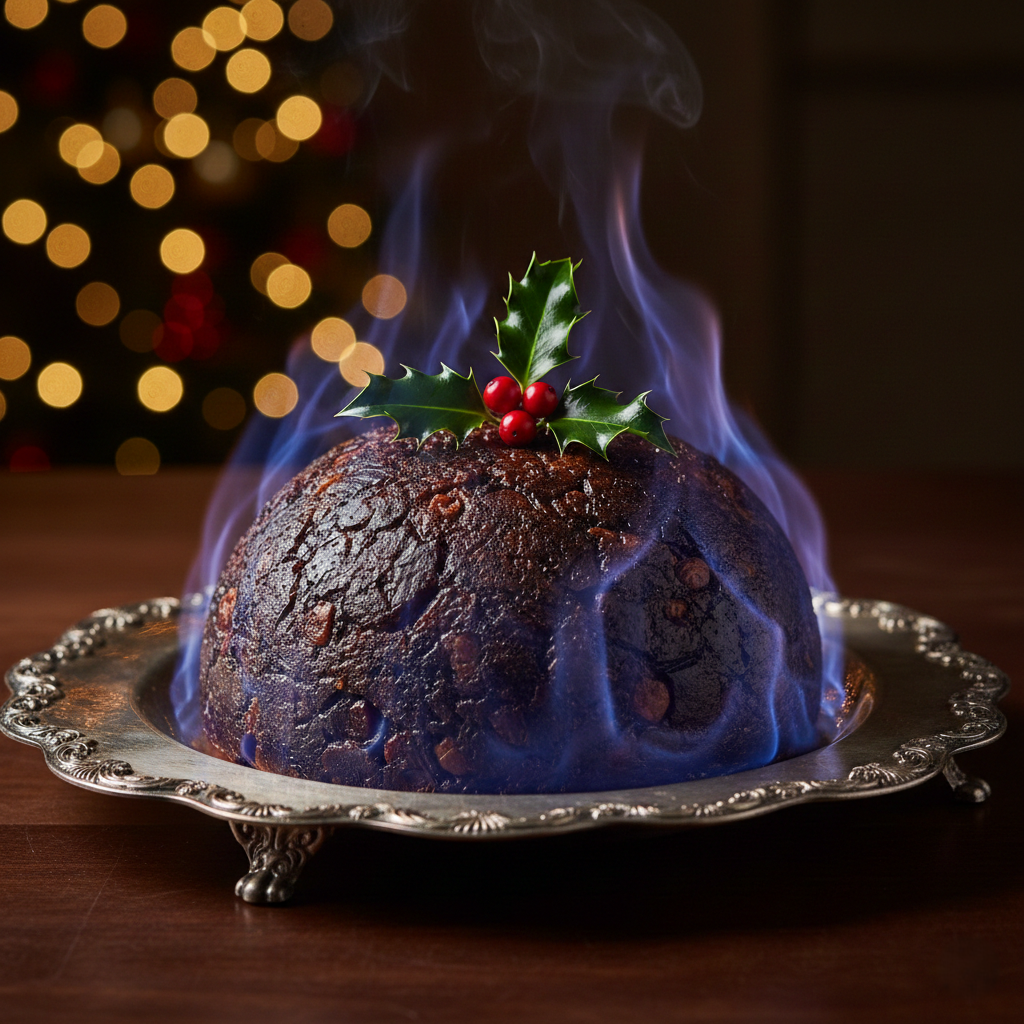
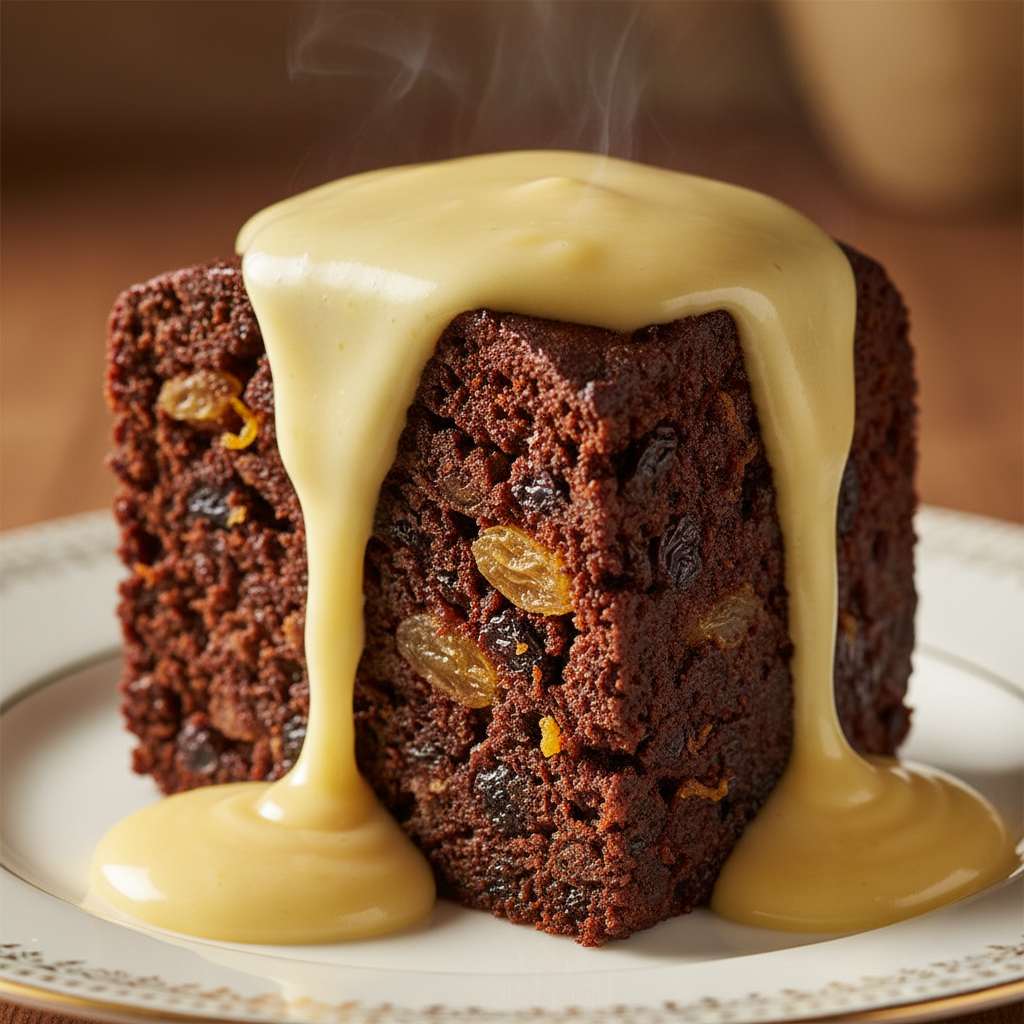
Imagine the lights dimming at the end of a lavish feast. The room falls silent, filled only with the heavy, sweet scent of cinnamon, nutmeg, and caramelized sugar. Suddenly, a blue flame erupts, dancing atop a dark, dome-shaped dessert brought to the table.
This isn’t just cake; it is history, magic, and culinary indulgence wrapped into one. This is the British Christmas Pudding—also known as Plum Pudding—and it is the undisputed king of the festive table.
While the modern world rushes toward instant gratification, this recipe asks you to slow down. It invites you to embrace the warmth of the kitchen, the scent of soaking fruits, and the anticipation of a treat that improves with time.
Why This Recipe Deserves Your Time
Why make your own when supermarkets stack them high in bright red boxes? Because the difference is night and day. A factory-made pudding often tastes overly sweet and artificial. A homemade pudding, however, is a revelation. It is a complex tapestry of flavors—zesty, spicy, boozy, and buttery all at once.
This recipe is designed to be indulgent. We aren’t cutting corners on the butter or the brandy. This is the dessert you wait all year for, so it deserves to be magnificent. Furthermore, this specific version uses butter instead of the traditional beef suet. While suet is classic, butter provides a more familiar, melt-in-the-mouth richness that many modern palates prefer, without sacrificing that essential dense texture.
The Hidden Benefits of Baking From Scratch
Beyond the superior taste, mastering the Christmas Pudding offers valuable culinary lessons and surprising benefits:
- The Art of Steaming: You will learn the technique of steaming a batter rather than baking it. This gentle, moist heat allows the sugars to caramelize slowly without burning, creating that signature black-treacle color.
- Natural Preservation: You will understand how high sugar content and alcohol act as natural preservatives. A well-made pudding can last for months.
- Cost and Quality Control: Premium Christmas puddings can cost a fortune. By making it yourself, you control the quality of the dried fruits and the booze.
Stir-Up Sunday & The Magic of Tradition
Food is rarely just about sustenance; it is about connection. The Christmas Pudding is steeped in British folklore. Traditionally, it is made on “Stir-Up Sunday,” the last Sunday before Advent.
There is a beautiful custom associated with this day: every member of the family takes a turn stirring the heavy batter from East to West (honoring the journey of the Three Wise Men). As you stir, you make a secret wish. By making this, you are weaving yourself into a centuries-old tapestry of celebration. It brings family together—not just for the eating, but for the making.
The Recipe
This is where the magic happens. Do not be intimidated by the long ingredient list or the cooking time. The active work is minimal; the steamer does the heavy lifting.
The Ingredients
The Fruit Base (Soak overnight for best results)
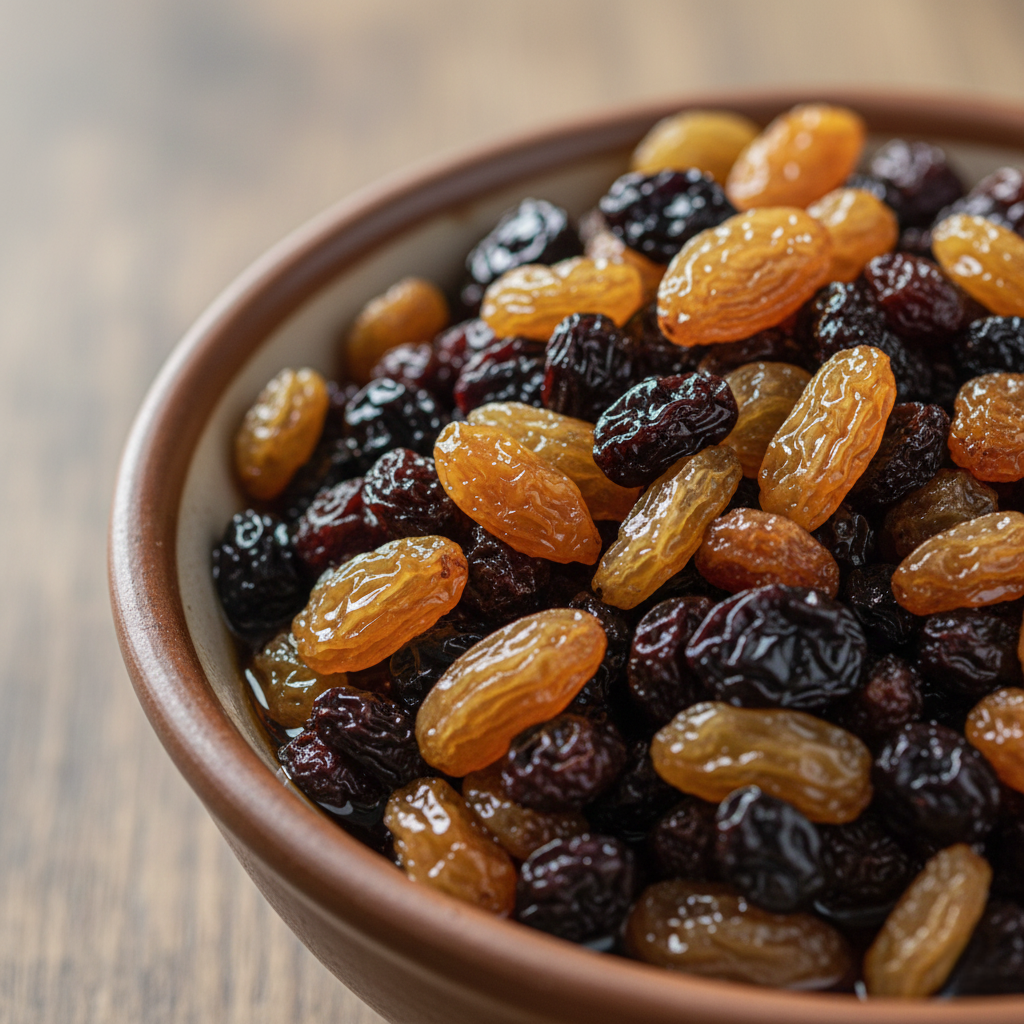
- 150g (5 oz) Currants: Small, tart, and intense.
- 150g (5 oz) Sultanas: Golden and sweet.
- 150g (5 oz) Raisins: Dark and fleshy.
- 50g (1.7 oz) Mixed Candied Peel: Chopped finely for a citrus bite.
- 100ml (3.5 fl oz) Brandy: Plus extra for “feeding” and flaming.
The Batter
- 175g (6 oz) Unsalted Butter: Softened to room temperature.
- 175g (6 oz) Dark Brown Soft Sugar: For deep molasses flavor.
- 2 Large Eggs: At room temperature.
- 100g (3.5 oz) Plain Flour (All-Purpose)
- 175g (6 oz) Fresh Breadcrumbs: Crucial tip: Blitz slightly stale bread in a food processor.
- 1 tsp Ground Mixed Spice
- 1/4 tsp Ground Nutmeg & Cinnamon
- Zest of 1 Lemon & 1 Orange
- 1 Apple: Peeled, cored, and grated.
- 50g (1.7 oz) Chopped Almonds
Equipment Needed
- 1.5 Liter (2.5 pint) Pudding Basin
- Large Mixing Bowl
- Baking Parchment & Aluminum Foil
- Kitchen String
- Large Pot/Steamer
Step-by-Step Instructions
Phase 1: The Soak
- Plump the Fruit: The day before, place the raisins, sultanas, currants, and peel into a bowl. Pour over the brandy. Cover and leave overnight.
Phase 2: The Mix
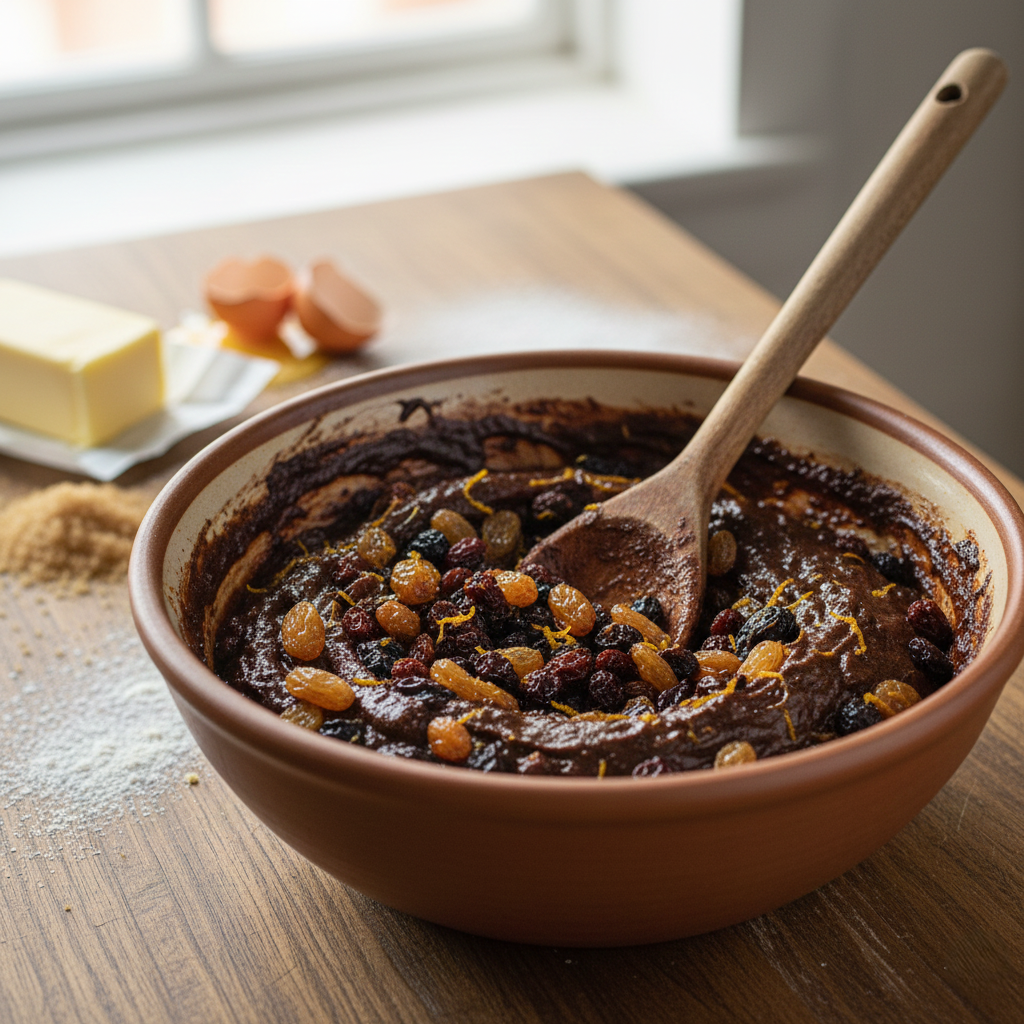
- Cream the Butter: Beat the softened butter and dark brown sugar until creamy.
- Add the Eggs: Beat in eggs one at a time. Add a spoonful of flour if it curdles.
- Dry Ingredients: Sift in the flour and spices. Fold gently.
- The Texture Builders: Stir in fresh breadcrumbs, grated apple, zest, and almonds.
- The Union: Tip in the brandy-soaked fruit. Make a wish as you stir!
Phase 3: The Wrap
- Prepare the Basin: Generously grease your pudding basin.
- Fill: Spoon the mixture in and press down firmly.
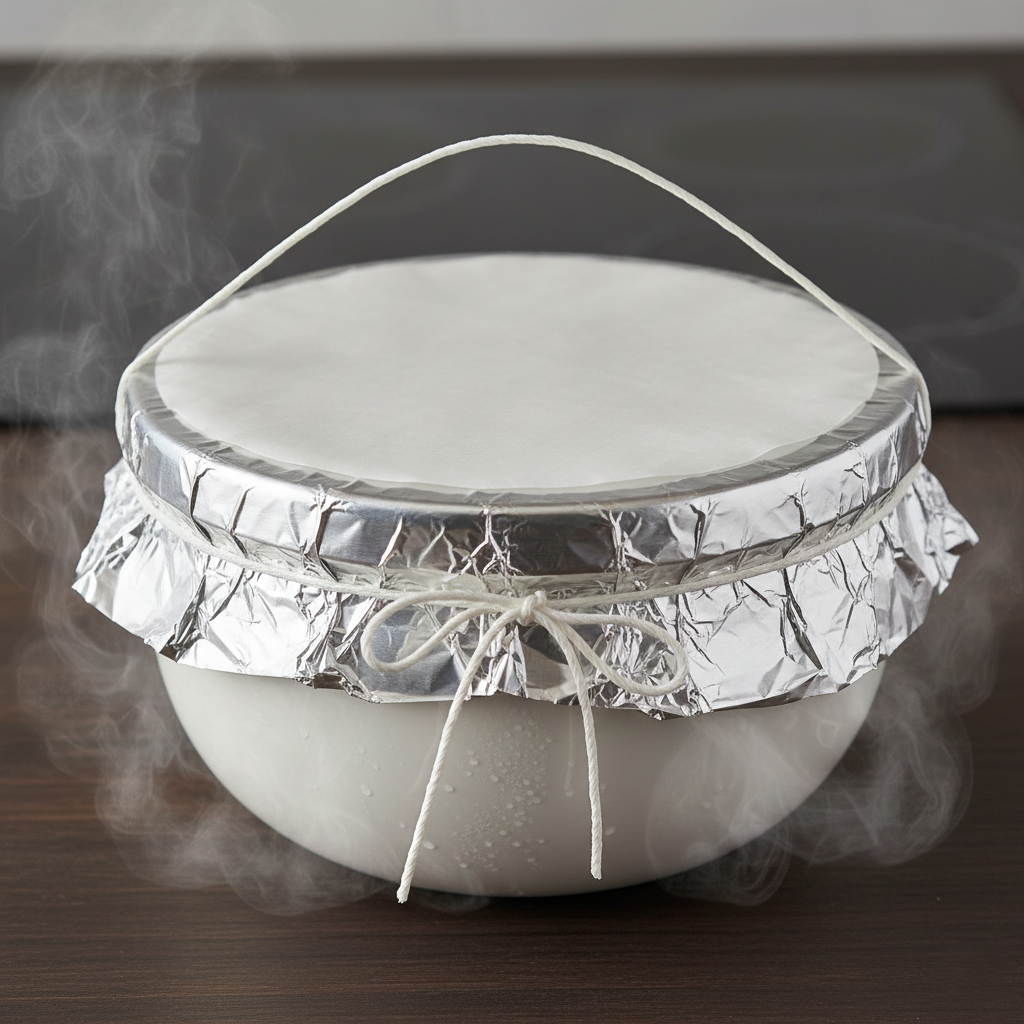
- The Lid: Create a lid with a pleat in the center using parchment and foil. Tie it tightly with string under the rim.
Phase 4: The Steam
- The Bath: Place a saucer in your pot. Place the pudding on the saucer.
- Add Water: Pour boiling water halfway up the side of the basin.
- Steam: Cover and simmer gently for 6 to 7 hours. Keep the water topped up!
Phase 5: Cooling & Service
- Store: Cool, re-wrap with fresh paper/foil, and store in a cool place until Christmas.
- The Big Day: Re-steam for 1-2 hours. Turn out onto a plate.
- The Flame: Warm a ladle of brandy, light it, and pour over the pudding.
Chef’s Tips for Success
- The Breadcrumb Rule: Use fresh breadcrumbs, not dried store-bought ones, to avoid a dry pudding.
- Feeding the Pudding: If making weeks in advance, poke holes in the pudding and drizzle a teaspoon of brandy once a week.
- Darker is Better: For a near-black pudding, add a tablespoon of black treacle (molasses) to the mix.
Frequently Asked Questions
Q: Can I make this pudding alcohol-free?
Absolutely! Substitute brandy with strong black tea or orange juice. Store in the fridge and eat within a week.
Q: Why is my pudding crumbly?
This happens if the pudding wasn’t pressed down firmly or if dry breadcrumbs were used.
Q: Can I use a microwave to reheat it?
Yes. Loosen the lid and microwave on medium for 5-8 minutes, checking halfway.
Conclusion
This British Christmas Pudding is more than just a recipe; it is a labor of love. The combination of the dark, treacle-rich sponge, the burst of boozy fruit, and the crunch of almonds creates a sensory experience that defines the holiday season.
Put the pot on, let the windows steam up, and enjoy the incredible aroma that fills your home. It smells like Christmas.