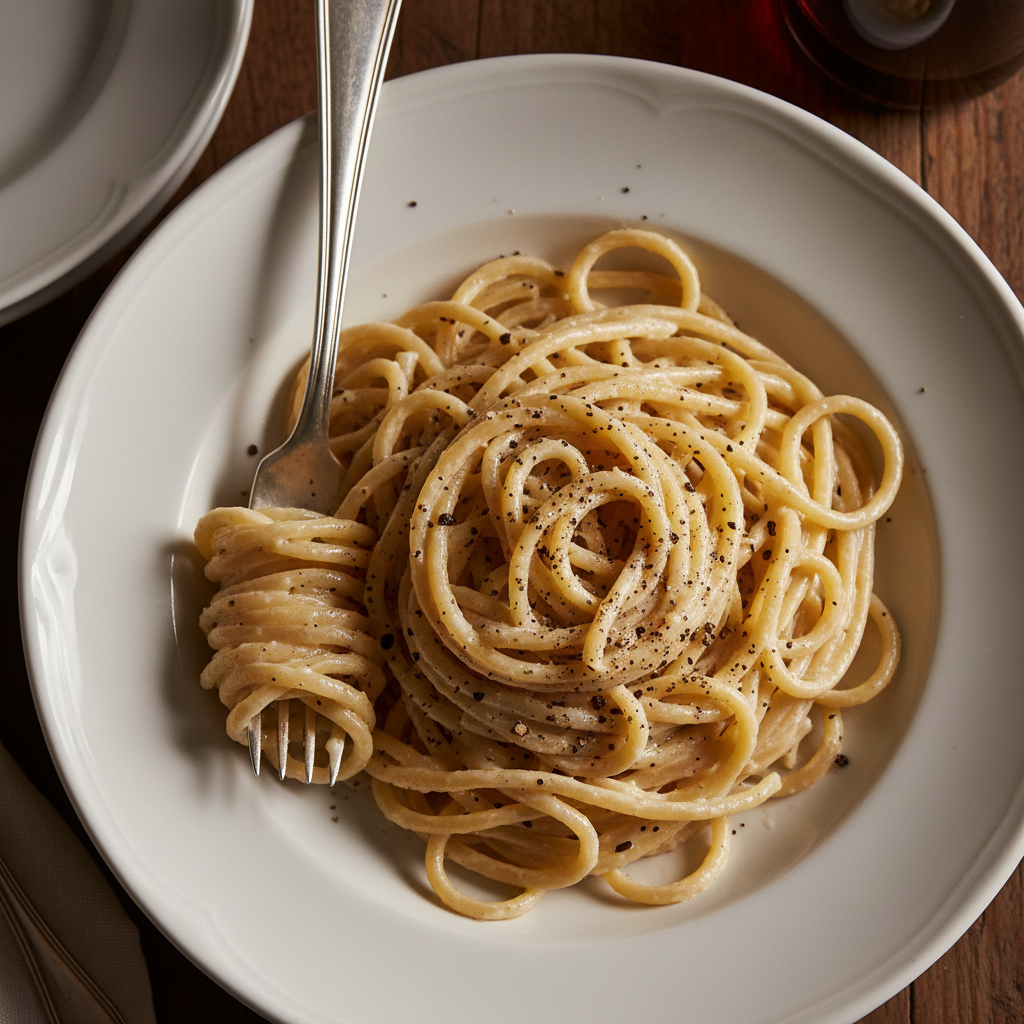
Imagine a dish that requires only three main ingredients yet commands the respect of top chefs around the world. It is creamy without a drop of heavy cream. It is spicy, savory, and aggressively simple.
Welcome to the world of Cacio e Pepe.
Pronounced kah-cho eh peh-peh (literally “Cheese and Pepper”), this Roman classic is the culinary equivalent of a magic trick. When done right, starchy pasta water, sharp sheep’s milk cheese, and fat emulsify into a velvety, glossy sauce that clings to every strand of spaghetti. It is the ultimate comfort food, a testament to the idea that less really is more.
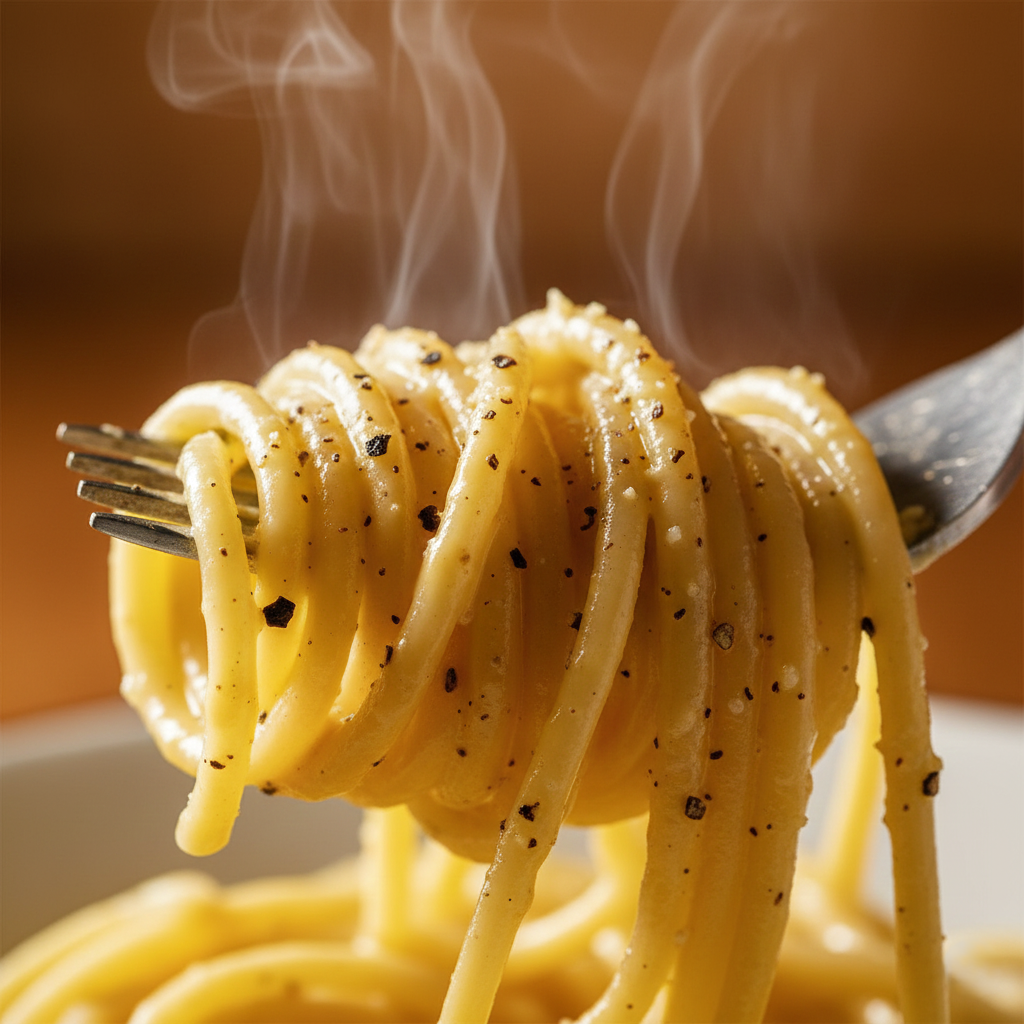
Whether you are looking for a lightning-fast weeknight dinner or a sophisticated dish to impress a date, mastering this recipe is a rite of passage for any home cook. Let’s walk through the science, the soul, and the steps to creating the perfect bowl of Roman gold.
Why should you obsess over Cacio e Pepe? Because it is the ultimate “back pocket” recipe. We have all been there: it’s 8:00 PM on a Tuesday, the fridge is nearly empty, and you are exhausted. You could order takeout, or you could create a restaurant-quality meal in 15 minutes flat.
There is a primal satisfaction in making this dish. The aroma of toasting black peppercorns—earthy, floral, and sharp—wakes up your senses immediately. The way the sauce thickens before your eyes feels like alchemy. It is indulgent, vegetarian-friendly, and deeply satisfying. This isn’t just pasta; it is a warm hug in a bowl.
Beyond the incredible taste, learning to make Cacio e Pepe teaches you one of the most vital skills in Italian cooking: emulsification.
By mastering this dish, you aren’t just following a recipe; you are learning how to manipulate starch and temperature to create a sauce. You will learn that pasta water is not waste—it is liquid gold.
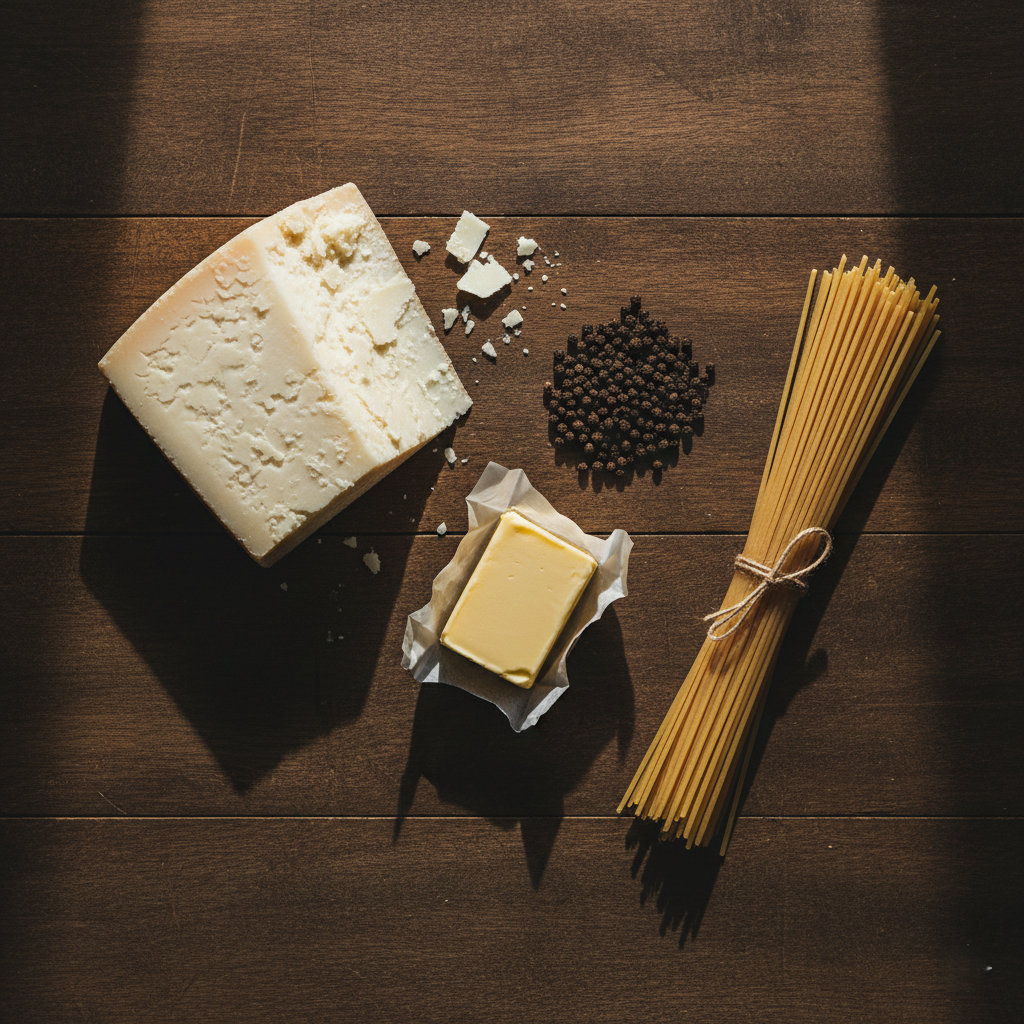
To eat Cacio e Pepe is to step back in time. This dish dates back centuries to the shepherds of the Roman countryside (the Agro Romano).
Shepherds spent months in the hills and needed food that wouldn’t spoil. Dried pasta? Check. Aged cheese (Pecorino)? Check. Black peppercorns? Check. It was the original survival food—high in calories for energy and warm enough to combat cold nights.
Today, it stands as one of the four “Holy Pastas” of Rome, alongside Carbonara, Amatriciana, and Gricia. While the traditional recipe uses only pasta, cheese, and pepper, the modern restaurant evolution often incorporates a touch of butter. Why? Butter acts as a stabilizer. It helps the cheese and water bind together, preventing the sauce from clumping—a common nightmare for beginners. We are embracing that technique today to ensure your success.
This is where the rubber meets the road. Read through the instructions entirely before turning on the stove. Cacio e Pepe moves fast.
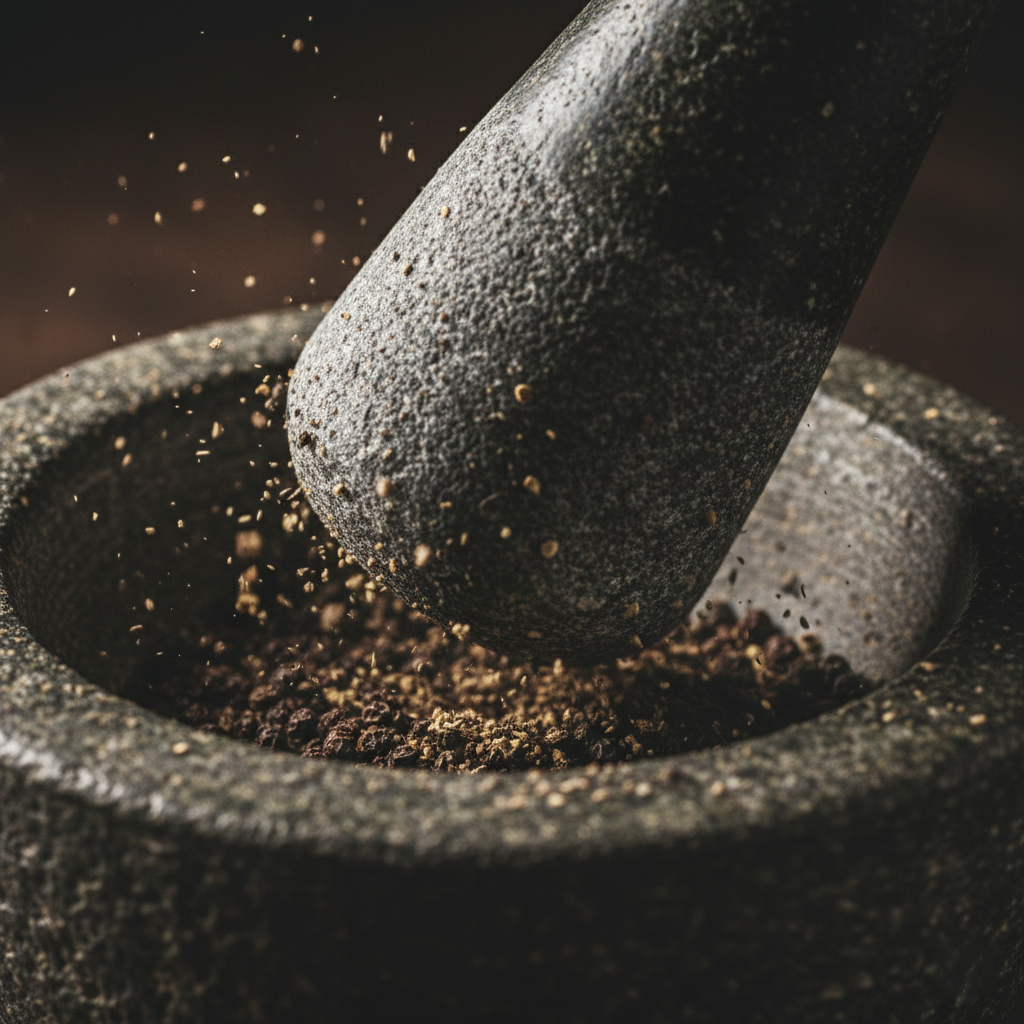
1. Prep Your Pepper Place the whole peppercorns in a mortar and pestle and crush them. You want a coarse grind—chunks that you can feel between your teeth, not a fine powder. Chef’s Move: Place the crushed pepper in a cold, dry skillet. Turn the heat to medium. Toast the pepper for 1-2 minutes until fragrant. You’ll smell a spicy, woody aroma. Remove from the pan and set aside. This “wakes up” the flavor.
2. The Water Strategy Fill your large pot with water, but don’t fill it all the way. We want a high concentration of starch, so use just enough water to cover the pasta comfortably. Bring to a boil and add salt. Taste the water; it should be salty, but less salty than the ocean (Pecorino is a salt bomb, so we need to be careful).
3. Cook the Pasta Add the spaghetti to the boiling water. Set a timer for 2 minutes less than the package instructions for “al dente.” We will finish cooking the pasta in the skillet.
4. Build the Sauce Base While the pasta boils, return your skillet to medium heat. Add the toasted pepper and the cold butter. Once the butter melts and foams slightly, ladle in about ½ cup of the starchy boiling pasta water. It will sizzle and bubble aggressively. Swirl the pan to create a thin, watery emulsion.
5. The Transfer When your timer goes off, use tongs to drag the spaghetti directly from the boiling water into the skillet. Do not use a colander! We want that dripping starch water. Toss the pasta vigorously in the pepper-butter mixture. The pasta will absorb the flavor as it finishes cooking. Add more pasta water a ladle at a time if the pan looks dry. The liquid should look cloudy and slightly thickened, almost like a glaze.
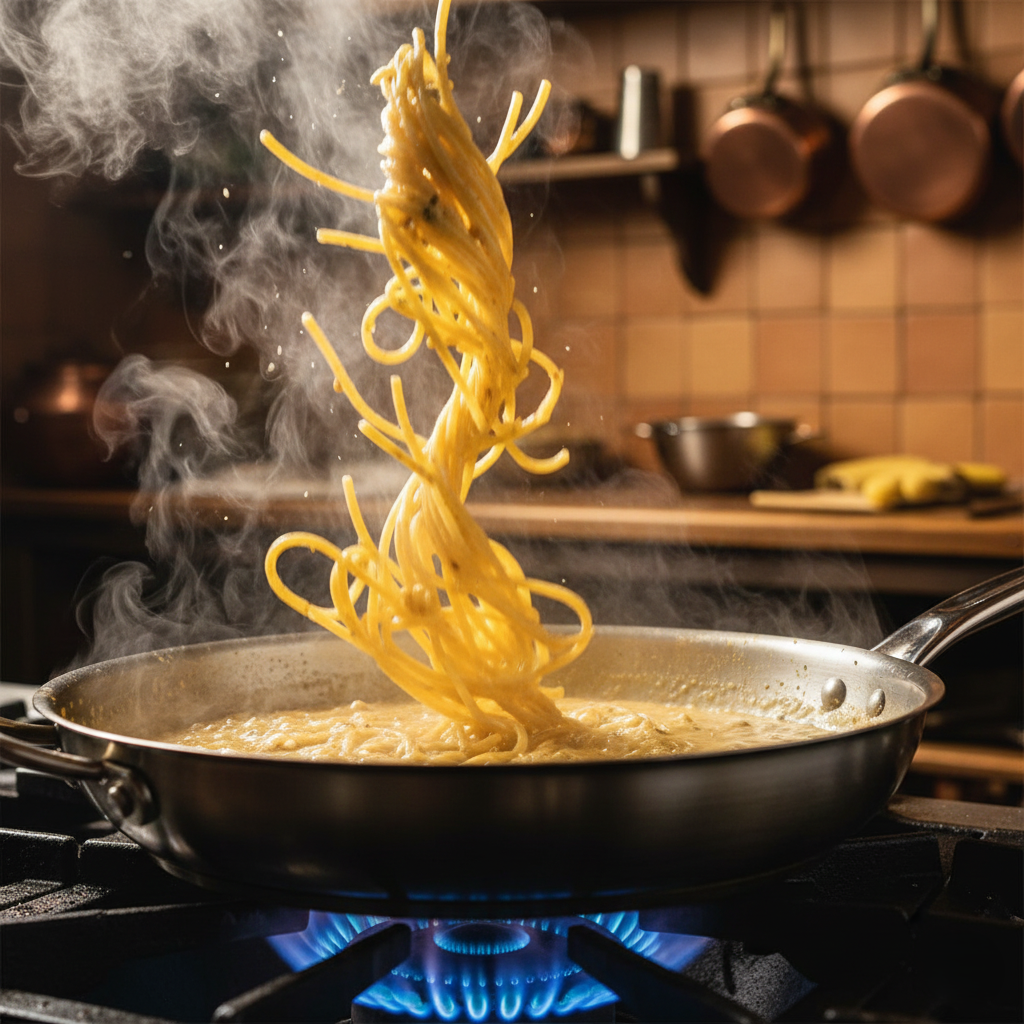
6. The “Mantecatura” (The Creaming) This is the most critical step. Turn off the heat. I repeat: Turn off the heat. Let the pan sit for 30 seconds to cool slightly. If it’s too hot, the cheese will separate into stringy clumps. Gradually sprinkle the finely grated Pecorino Romano over the pasta while tossing and stirring constantly and vigorously. Technique: Add a splash of pasta water, toss, add cheese, toss. The friction + warm water + cheese fat creates the cream.
7. Adjust and Serve If the sauce is too thick (clumpy), add a splash more hot water. If it’s too thin, keep tossing; as it cools, it thickens. You are looking for a glossy sheen that coats the pasta completely. Plate immediately. Top with a final dusting of Pecorino and extra black pepper.
Can I use Parmesan instead of Pecorino? You can, but it won’t be Cacio e Pepe. Pecorino is made from sheep’s milk (pecora means sheep), which is tangier, saltier, and more grassy than cow’s milk Parmesan. Parmesan is milder and nuttier. If the flavor of Pecorino is too strong for you, try a 50/50 blend?
Can I make this ahead of time? Unfortunately, no. Cacio e Pepe is a dish of the moment. The emulsion is delicate. If you reheat it, the sauce will break and become oily. It is best eaten immediately after plating?
My cheese clumped up! Can I save it? It happens to the best of us. If it clumps, your pan was likely too hot. You can try adding a splash of cold water and stirring vigorously to bring the temperature down, but it’s hard to fix completely. Next time, wait longer before adding the cheese?
Is this dish gluten-free friendly? Yes, but you need to be careful. Gluten-free pasta releases starch differently than wheat pasta. Look for a brand high in corn or rice starch. When boiling, use even less water to ensure the starch concentration is high enough to thicken the sauce?
Can I add other toppings like chicken or shrimp? While traditionalists might frown, it is your kitchen! However, the beauty of this dish lies in its simplicity. If you want protein, serve a grilled steak or chicken breast on the side rather than mixing it into the delicate sauce?
How do I store leftovers? If you have leftovers, store them in an airtight container for up to 2 days. To reheat, do not use the microwave. Place the pasta in a skillet with a splash of water and heat gently over low heat, tossing constantly to try and re-emulsify the sauce?
There you have it—the secrets to the Roman kitchen, unlocked in your own home.
Making Cacio e Pepe is more than just cooking dinner; it is a practice in patience and timing. The first time you see that cloudy water transform into a luxurious, creamy sauce, you will feel a genuine sense of culinary victory.
So, grab your tongs, crack that pepper, and don’t be afraid of the heat. Tonight, we dine like Romans. Buon appetito!