Italian Harvest Minestrone: The Ultimate Hearty Vegetable Soup
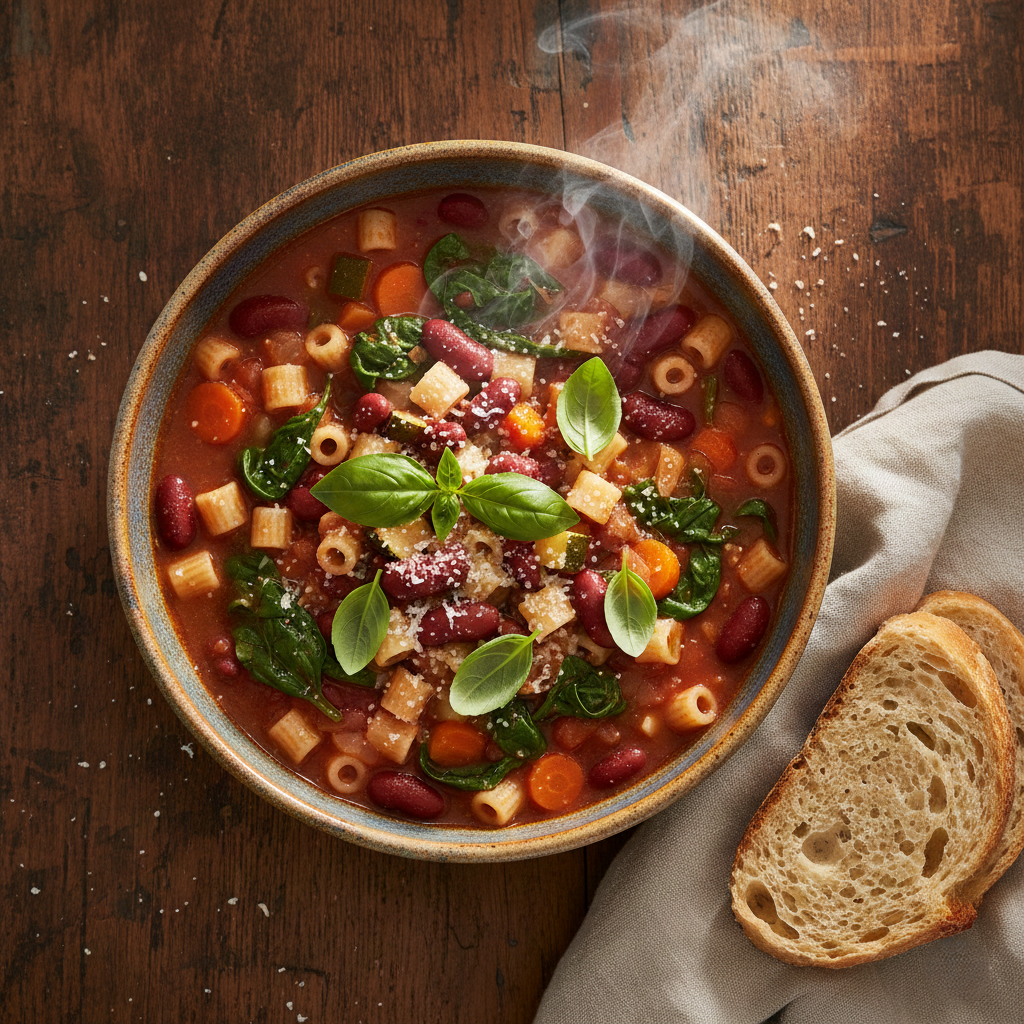
A close-up of the finished dish, ready to be served.
There is a specific kind of magic that happens when you combine simple garden vegetables with time, heat, and a little bit of patience. The kitchen begins to smell savory and sweet, the windows fog up with steam, and the promise of a comforting meal takes over the house.
Welcome to the world of Minestrone.
This isn’t just a soup; it is a thick, restorative stew that bridges the gap between a light starter and a heavy main course. It is the definition of a “hug in a bowl.” We are talking about a vibrant, tomato-rich broth packed with tender mixed vegetables, creamy kidney beans, and chewy ditalini pasta, all simmered together with a secret weapon: a parmesan rind.
If you are looking for a meal that satisfies the soul as much as the stomach, you have found it. Let’s get cooking.
Why This Soup Deserves a Spot on Your Table
Why should you spend your evening chopping vegetables for this specific recipe? Because Minestrone is the ultimate culinary chameleon. It is the answer to the question, “What do I make for dinner when I want something healthy but deeply satisfying?”
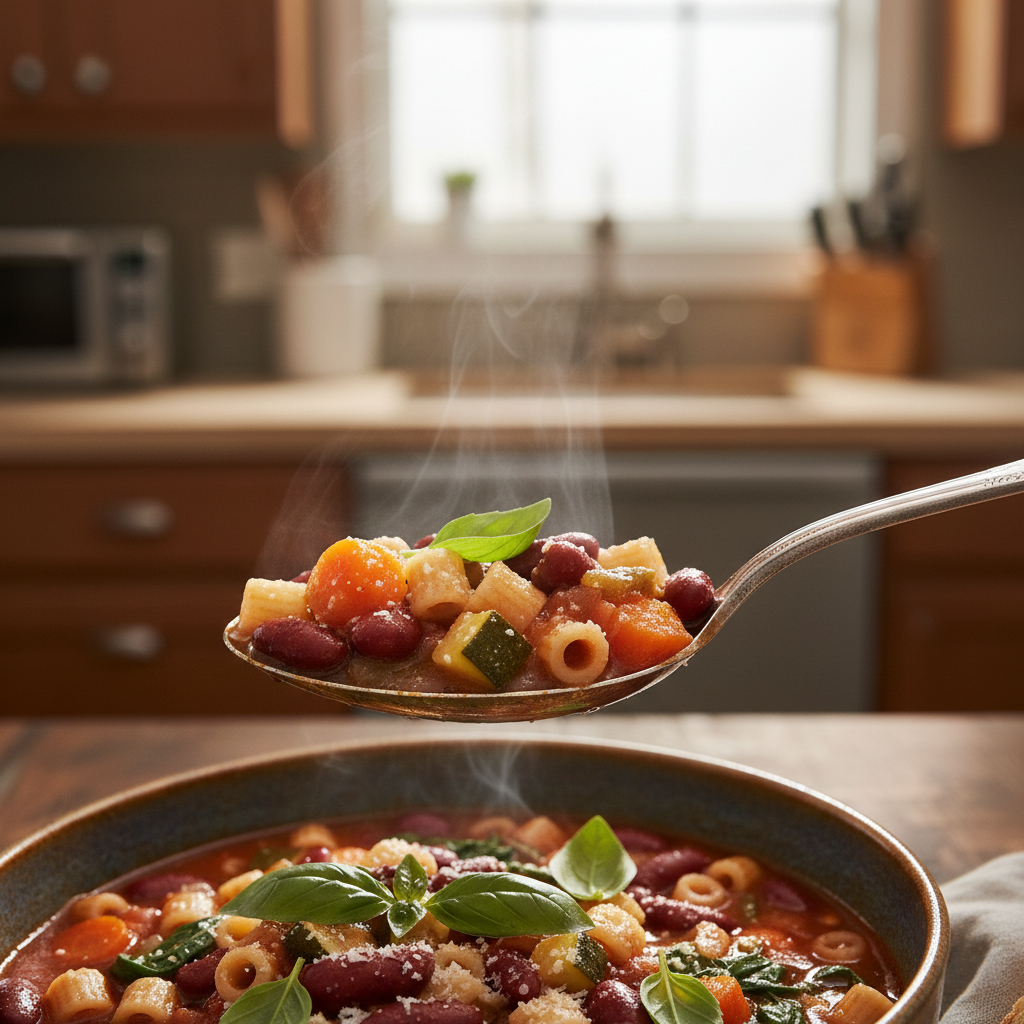
While many vegetable soups can feel thin or leave you hungry an hour later, this version is designed to be a Hearty Vegetable Soup. The addition of protein-rich kidney beans and starch-releasing ditalini pasta creates a texture that is velvety and substantial. It captures the essence of comfort food without the heaviness of cream or meat.
Furthermore, this dish is a sensory delight. The visual appeal of the red kidney beans against the green zucchini and deep red tomato broth makes it a feast for the eyes before you even take a bite.
Nutrition, Economy, and Technique
Beyond the flavor, this Minestrone offers incredible value to your life in three distinct ways:
1. A Nutritional Powerhouse
This bowl is a multivitamin in disguise. By using a diverse range of mixed vegetables—carrots, celery, onions, zucchini, and spinach—you are ingesting a wide spectrum of vitamins, minerals, and antioxidants. The kidney beans provide a massive dose of fiber and plant-based protein, making this a completely balanced vegetarian meal that stabilizes blood sugar and keeps you full.
2. The Art of “Clean out the Fridge”
Minestrone is economically brilliant. It is a “catch-all” recipe. Do you have half a zucchini wilting in the drawer? Throw it in. A handful of green beans? They go in too. This recipe teaches you how to reduce food waste effectively, turning “scraps” into a gourmet experience.
3. The Umami Secret
The culinary technique you will master here is the use of the Parmesan Rind. Many home cooks throw away the hard outer shell of their parmesan wedges. This is a mistake! By simmering the rind in the broth, you infuse the soup with natural glutamates (umami). It mimics the richness of a meat bone broth while keeping the dish vegetarian.

A History of “Cucina Povera”
To cook Minestrone is to connect with centuries of Italian history. This dish is a staple of cucina povera, which translates to “poor kitchen” or peasant cooking. In the past, rural Italian families didn’t have access to expensive cuts of meat. Instead, they relied on what the land provided.
Minestrone was never a rigid recipe; it was a reflection of the garden and the season. In the spring, it was bright and green with peas and broad beans. In the winter, it became deeper and darker, relying on root vegetables and preserved tomatoes.
When you make this soup, you are participating in a tradition of resourcefulness. You are connecting with the idea that food doesn’t need to be fancy to be delicious—it just needs to be treated with care. It reminds us of family gatherings where a single large pot could feed a crowd, fostering conversation and community.
How to Make the Perfect Minestrone
Now, let’s turn these concepts into reality. The key to a great Minestrone is building flavor in layers. We don’t just dump everything in at once; we coax the flavor out of each ingredient.
Equipment Needed
- Large Dutch Oven or Heavy-Bottomed Pot: Essential for even heat distribution.
- Chef’s Knife and Cutting Board: There is a fair amount of chopping involved.
- Wooden Spoon: For sautéing and scraping up the flavorful bits (fond).
- Vegetable Peeler: For the carrots.
- Can Opener.
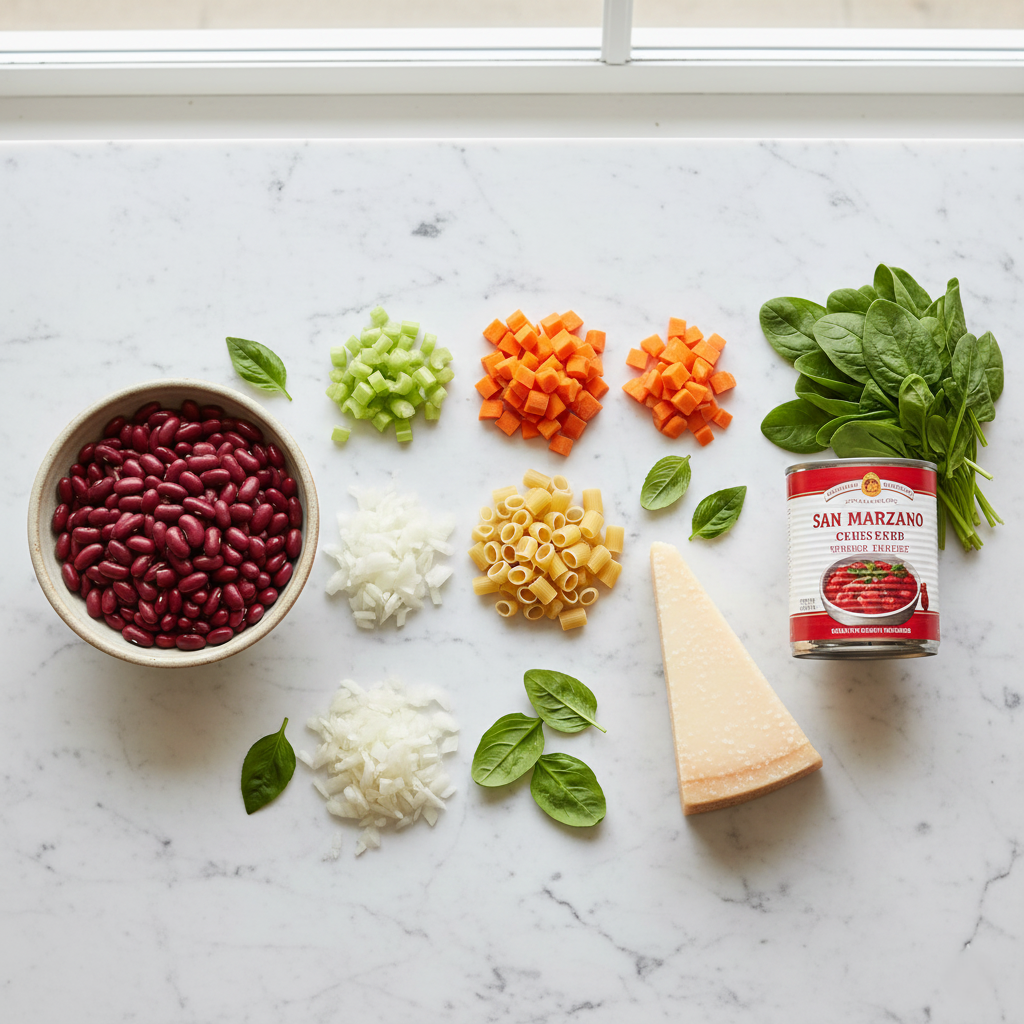
The Ingredients
- Olive Oil: 3 tablespoons (Extra virgin is best for flavor).
- Onion: 1 medium, yellow or white, diced evenly.
- Carrots: 2 medium, peeled and chopped into rounds or half-moons.
- Celery: 2 stalks, sliced securely.
- Garlic: 4 cloves, minced (don’t be shy with the garlic!).
- Tomato Paste: 2 tablespoons (adds a deep, caramelized tomato flavor).
- Seasonal Vegetables: 1 medium zucchini (diced) and 1 cup fresh green beans (trimmed and cut into 1-inch pieces).
- Canned Tomatoes: 1 can (28 oz / 800g) of crushed tomatoes.
- Vegetable Broth: 6 cups (approx. 1.5 liters). Use high-quality or homemade if possible.
- Kidney Beans: 1 can (15 oz), rinsed and drained. (Dark red kidney beans look best).
- Pasta: 1 cup Ditalini (small tube pasta). Note: Small shells or macaroni work too.
- The Secret Weapon: 1 Parmesan cheese rind (about 2-3 inches long).
- Spices: 1 teaspoon dried oregano, 1 teaspoon dried thyme, 1 bay leaf, pinch of red pepper flakes.
- Greens: 2 cups fresh spinach or kale, chopped.
- Seasoning: Salt and freshly cracked black pepper to taste.
- Acid: 1 teaspoon lemon juice or balsamic vinegar.
Step-by-Step Instructions
1. The Soffritto (The Flavor Base) Place your Dutch oven over medium heat and add the olive oil. Once the oil shimmers, add the diced onions, carrots, and celery. This trio is known as a soffritto in Italy. Sauté these veggies for about 8–10 minutes. You don’t want them to brown too much; you want them to soften and “sweat,” releasing their sweet, aromatic flavors.
2. Aromatics and Depth Add the minced garlic and tomato paste to the pot. Stir constantly for 1–2 minutes. The tomato paste should darken slightly in color—this caramelization removes the metallic taste of the paste and adds a rich depth. Sprinkle in the oregano, thyme, and red pepper flakes. The smell in your kitchen right now should be incredible.
3. The Liquid and The Rind Pour in the crushed tomatoes and the vegetable broth. Stir well to combine. Now, drop in your bay leaf and the Parmesan rind. Increase the heat to bring the soup to a gentle boil, then reduce the heat to low. Cover the pot partially with a lid and let it simmer for 20 minutes. This time allows the rind to melt its salty, nutty flavor into the broth.
4. The Hearty Additions Remove the lid. Stir in the kidney beans, green beans, and zucchini. (We add these softer veggies later so they don’t turn to mush). Bring the soup back to a simmer and cook for 10 minutes.
5. The Pasta Add the dry ditalini pasta directly into the pot. Cook until the pasta is al dente (firm to the bite). This usually takes about 8–10 minutes, but check your package instructions. Crucial Note: Stir occasionally so the pasta doesn’t stick to the bottom.
6. The Finish Once the pasta is cooked, turn off the heat. Stir in the fresh spinach (or kale). The residual heat of the soup will wilt the greens perfectly in about 1 minute. Fish out the bay leaf and the remaining parmesan rind (it will be gooey and soft—discard it, or eat it as a chef’s treat!). Stir in the lemon juice or balsamic vinegar. Taste the soup and adjust salt and pepper.
Chef’s Tips for Success
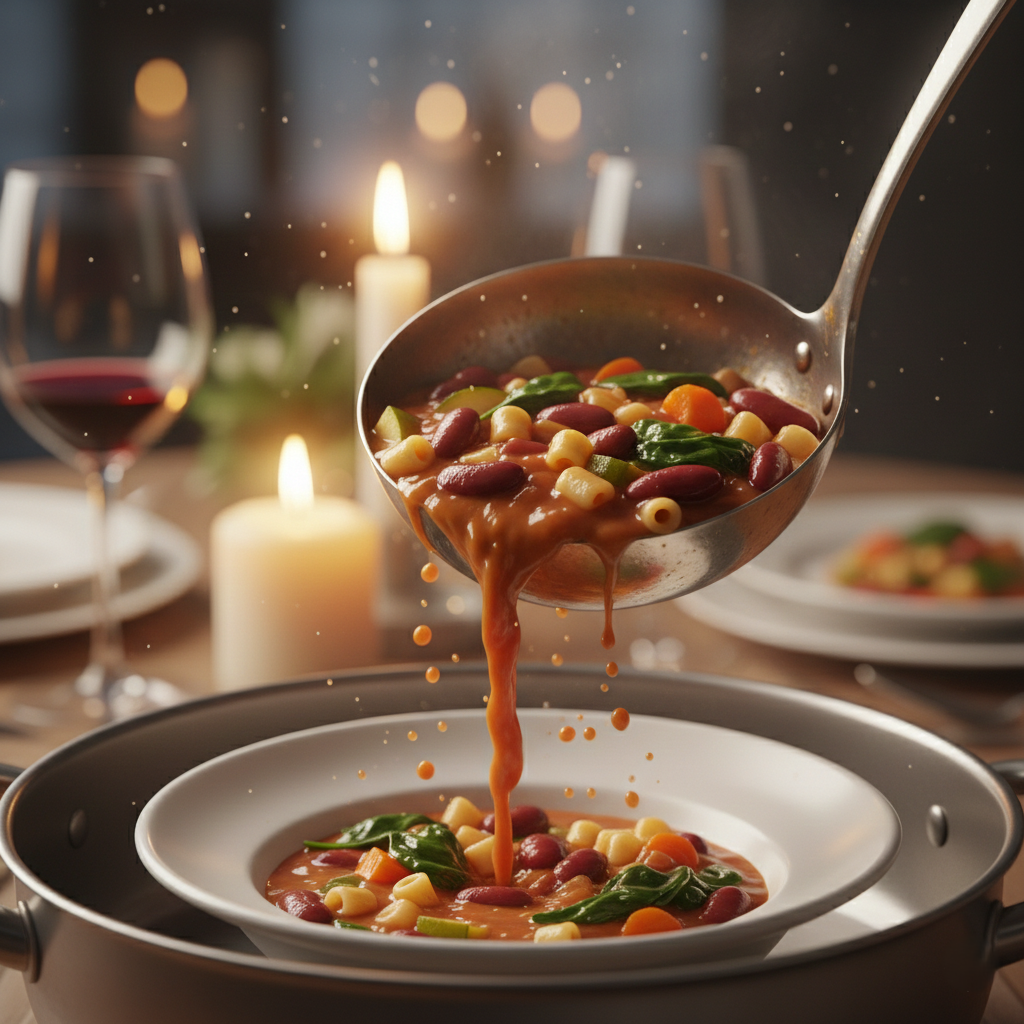
- The “Pasta Bloat” Prevention: Pasta acts like a sponge. If you plan to freeze this soup or eat it over several days, cook the pasta separately. Add the cooked pasta to individual bowls and ladle the soup over it.
- Consistency Control: If the soup becomes too thick after adding the pasta, simply splash in a little extra water or broth until it reaches your desired consistency.
- The Acid Factor: If your soup tastes “flat” despite adding salt, it is likely missing acid. That final teaspoon of lemon juice or vinegar wakes up the tomato flavor.
FAQ: Frequently Asked Questions
1. Can I make this gluten-free? Absolutely! Simply swap the Ditalini pasta for a gluten-free short pasta (like brown rice fusilli or GF macaroni). Alternatively, you can omit the pasta entirely and add cubed potatoes with the carrots in Step 1.
2. How long does this store in the fridge? Minestrone is famous for tasting better the next day as the flavors meld. It stores well in an airtight container for 3–4 days.
3. I don’t have kidney beans; what can I use? Cannellini beans (white kidney beans) or Great Northern beans are excellent traditional substitutes. Chickpeas (garbanzo beans) also work well and add a nice nutty texture.
4. Is the Parmesan rind vegetarian? Strictly speaking, traditional Parmigiano-Reggiano uses animal rennet. If you are a strict vegetarian, ensure you buy a “vegetarian parmesan-style cheese” or hard cheese that specifies it uses vegetable rennet.
5. Can I freeze this soup? Yes, but with a caveat. Vegetables like zucchini can get a little soft upon thawing. For best results, freeze the soup base (broth, beans, carrots, celery) and add fresh zucchini and fresh pasta when you reheat it.
Conclusion
There you have it—a pot of Italian Harvest Minestrone that is bubbling with flavor, nutrition, and history. This recipe is more than just a set of instructions; it is a reliable friend on a cold day and a healthy choice that doesn’t feel like a sacrifice.
Whether you serve it with a slice of crusty garlic bread, a side salad, or just enjoy it on its own, you are nourishing yourself with high-quality ingredients prepared with care.
So, grab your Dutch oven, find that parmesan rind you saved, and fill your kitchen with the aromas of Italy. Don’t forget to take a picture of your masterpiece and share it—good food is meant to be shared!
Happy Cooking!
Leave a Comment