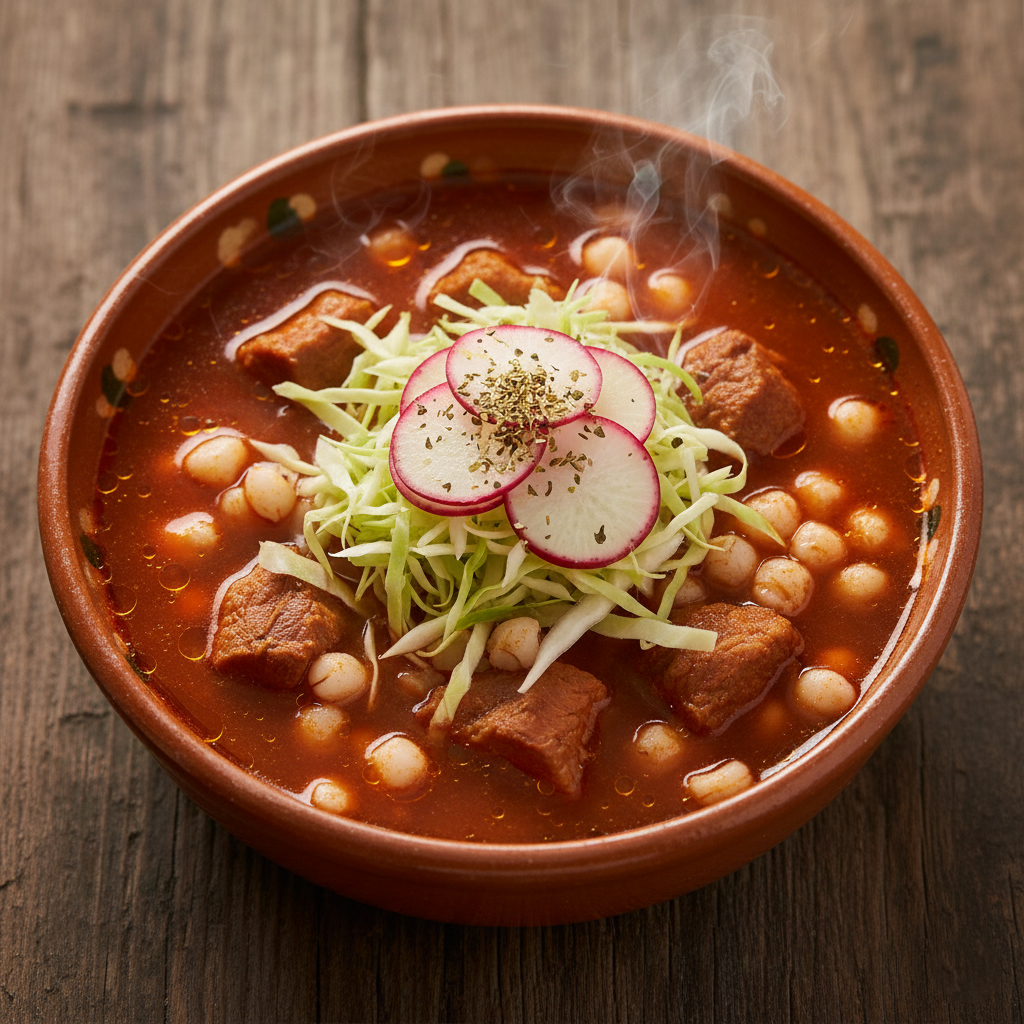
Imagine a bowl of soup so hearty, so vibrant, and so deeply flavorful that it doesn’t just feed your hunger—it feeds your soul. This is Pozole Rojo.
Picture a deep, brick-red broth shimmering with golden droplets of savory fat. Floating within are tender chunks of pork that melt on your tongue and chewy, pillowy kernels of white corn known as hominy. But the magic doesn’t stop at the pot. The experience is completed with a mountain of fresh, crunchy toppings: sliced radishes, crisp cabbage, zesty lime juice, and aromatic oregano.
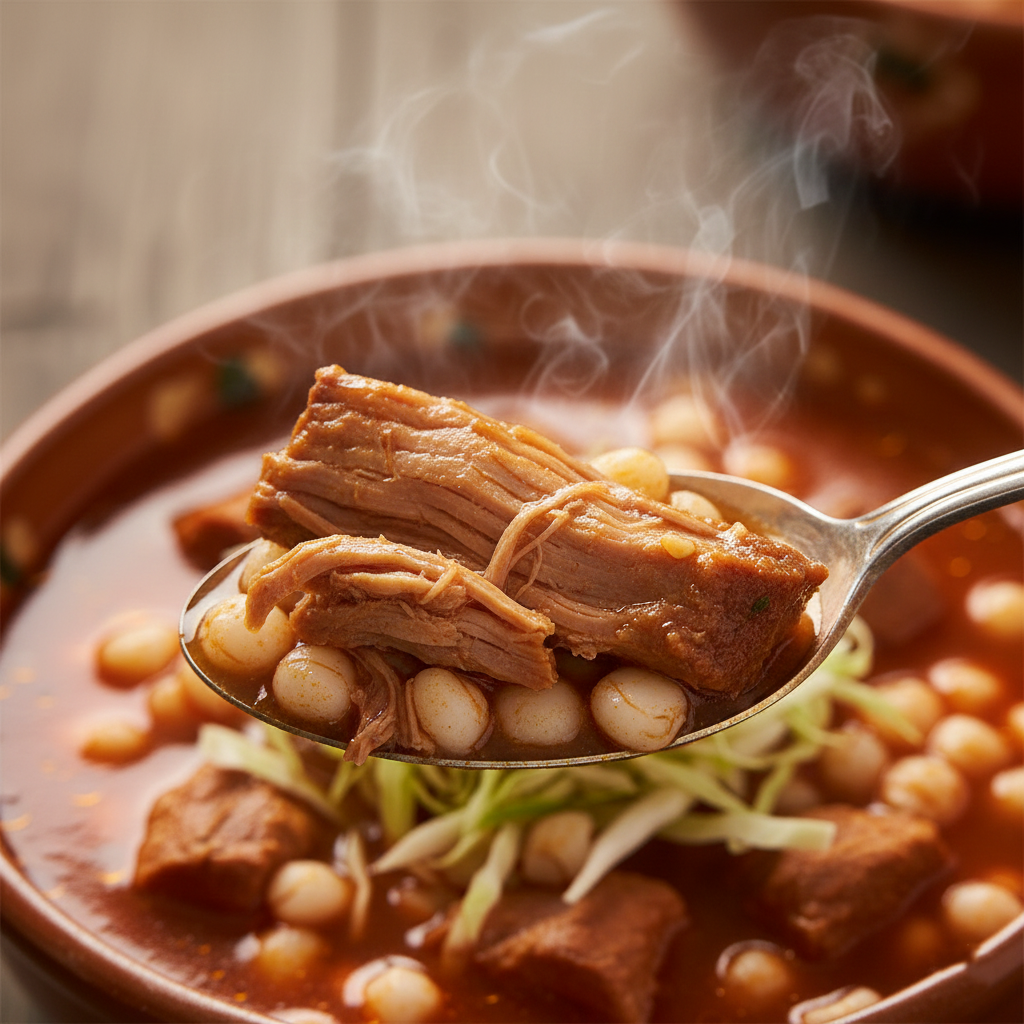
Pozole Rojo isn’t just a meal; it is a celebration in a bowl. Whether you are looking to impress a dinner party or simply need a warm embrace on a cold evening, mastering this traditional Mexican stew is a culinary milestone.
Why should you commit the time to make Pozole Rojo from scratch? Because there is no shortcut to this kind of depth.
We live in a world of fast food and instant meals, but Pozole demands patience, and it rewards you tenfold. This dish is the definition of “high-reward cooking.” The aroma alone—earthy dried chiles toasting, garlic sizzling, and pork slowly simmering—will fill your entire house, signaling to everyone that something special is happening in the kitchen.
If you are a fan of textures, this dish is your playground. You get the succulence of the pork shoulder, the starchy bite of the hominy, and the raw crunch of fresh vegetables on top. It hits every part of the palate: salty, spicy, acidic, and savory. It is the ultimate comfort food for a Sunday family gathering, yet elegant enough to serve as the centerpiece for a festive holiday dinner.
Beyond the incredible taste, learning to make Pozole Rojo offers immense value to your culinary skillset and your health.
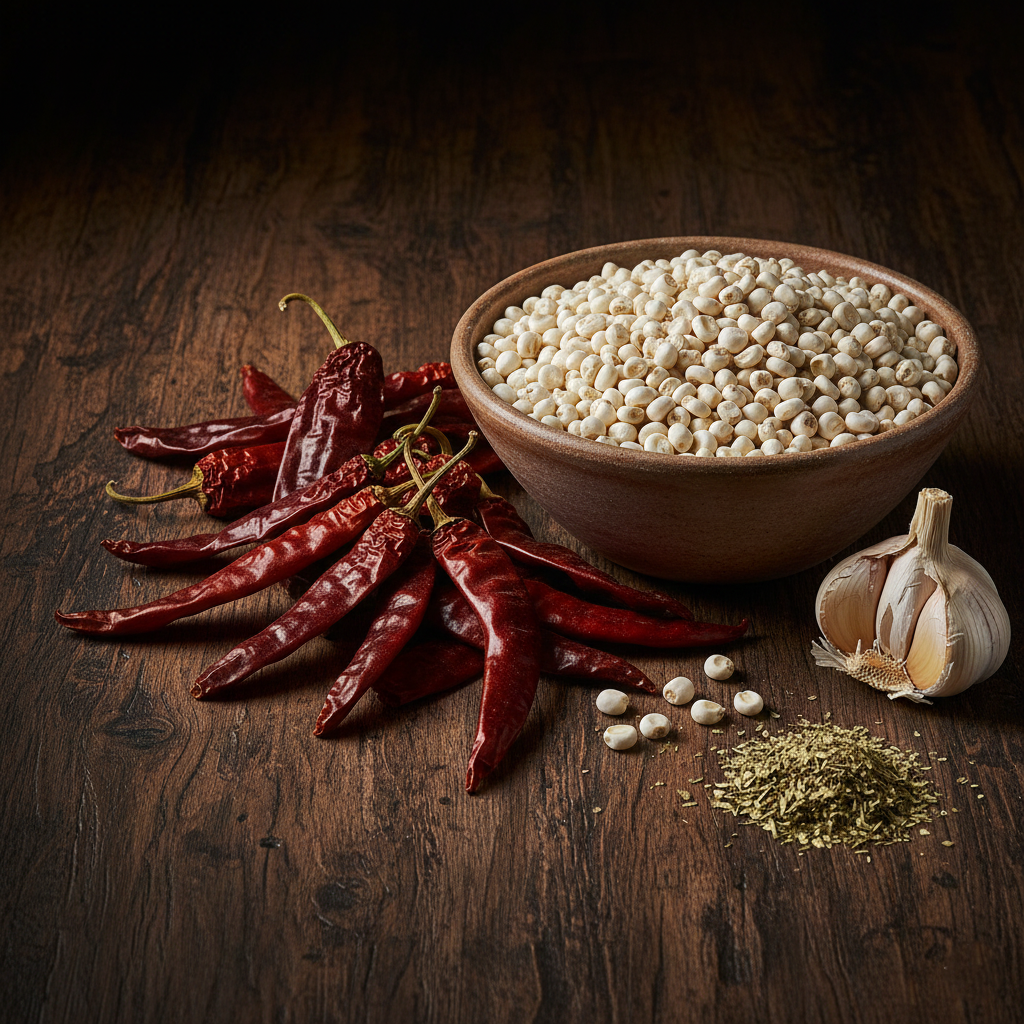
The heart of this recipe lies in the adobo (the red sauce). By making this, you will master the technique of rehydrating dried chiles. We are using Guajillo chiles, which provide a bright red color and a sharp, tangy heat, and Ancho chiles, which offer a dark, raisin-like sweetness. Learning to balance these two is a skill you can take to enchilada sauces and marinades.
Pozole is a nutritional heavyweight.
When you cook Pozole, you are stirring a pot of history that dates back to the Aztec empire. The name comes from the Nahuatl word pozoll, meaning “foamy,” referring to the way the large corn kernels bloom and froth when boiled.
Historically, corn was considered a sacred plant, and Pozole was a dish reserved for special occasions and rituals. Today, that spirit of celebration remains. In Mexico, Pozole is synonymous with Independence Day (September 16th), birthdays, and Christmas Eve.
But the true connection happens at the table. Pozole is served “naked” from the pot, and the diners finish the dish themselves. Passing bowls of shredded cabbage, squeezing fresh limes, and sprinkling oregano creates a communal atmosphere. It turns dinner into an interactive event, strengthening the bonds between family and friends.
This recipe is designed to be foolproof. We will build flavors in layers to ensure a complex, restaurant-quality result.
The Meat & Broth:
The Hominy:
The Red Chile Sauce (Adobo):
The Essential Garnishes (Do Not Skip!):
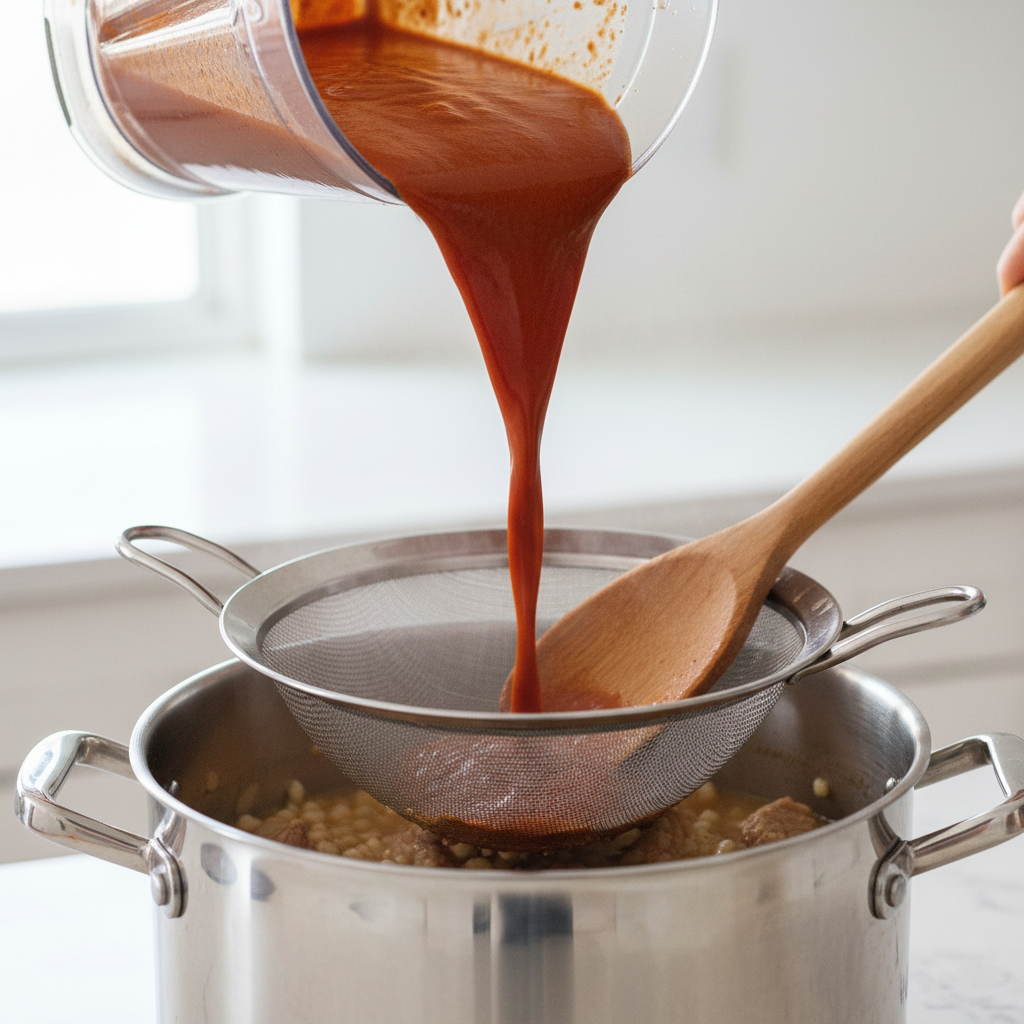
While the meat is simmering, we make the flavor bomb.
Can I use chicken instead of pork? Absolutely! For Pozole de Pollo, substitute the pork shoulder with bone-in chicken thighs or breasts. Adjust the cooking time, as chicken cooks much faster than pork shoulder (about 45 minutes total simmer).
Is this dish very spicy? Not necessarily. Guajillo and Ancho chiles are mild to medium on the heat scale; they are used more for flavor and color than burning heat. If you want it spicy, add a few Arbol chiles to the blender, or serve with crushed red pepper flakes on the side.
Can I make Pozole ahead of time? Yes, and you should! Pozole is one of those magical dishes that tastes even better the next day. The flavors of the chiles have more time to penetrate the meat and hominy. It will last 4–5 days in the refrigerator.
Can I freeze the leftovers? Yes, Pozole freezes beautifully. Store it in airtight containers for up to 3 months. Just remember to freeze it without the fresh garnishes (radish, lettuce, lime).
Where can I find Mexican Oregano? Check the “International” or “Latin” aisle of your grocery store. If you can’t find it, you can use regular Italian oregano, but add a pinch of lemon zest to mimic the citrusy notes of the Mexican variety.
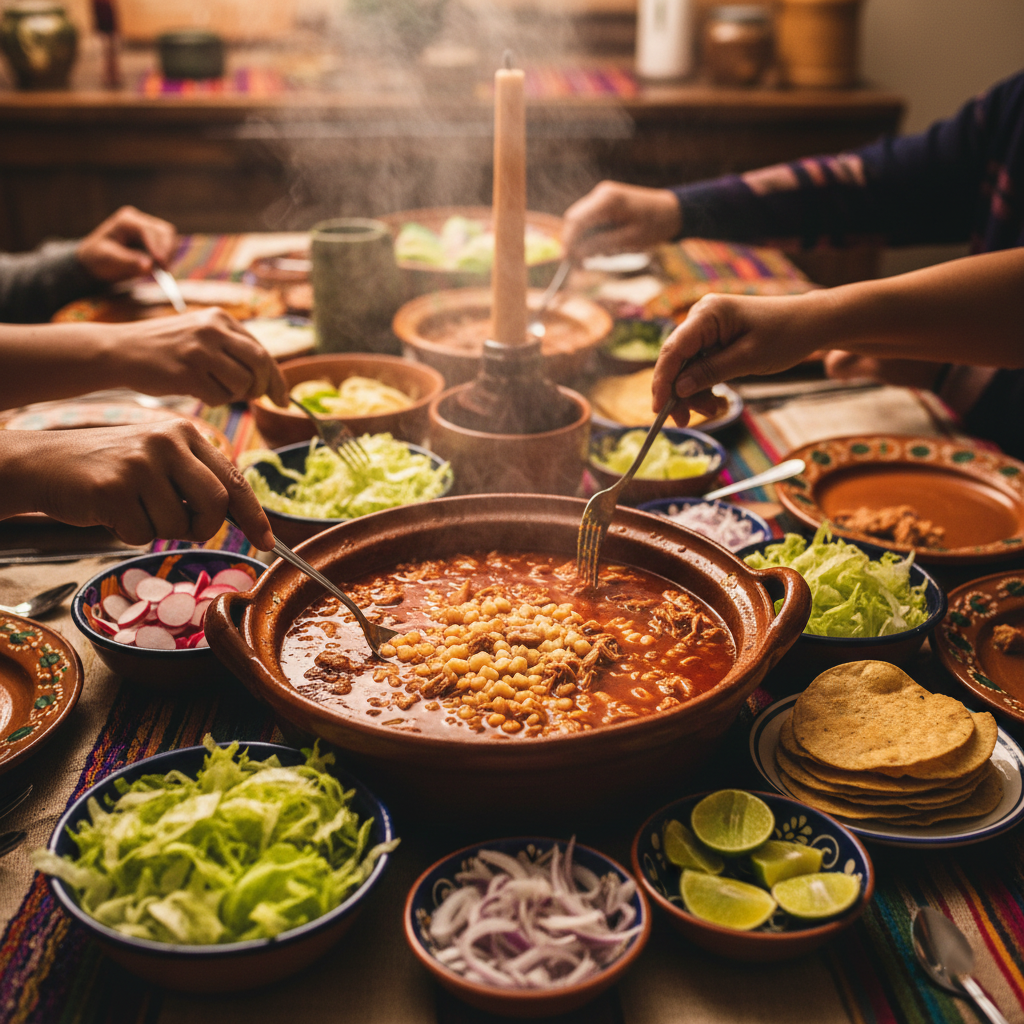
Cooking Pozole Rojo is a labor of love, but the first spoonful makes every minute worth it. The deep, smoky heat of the broth, the tender comfort of the pork and corn, and the bright, fresh crunch of the toppings create a symphony of flavors that is uniquely Mexican.
So, gather your ingredients, clear your schedule for a Sunday afternoon, and invite your favorite people over. Once you put that pot on the stove, you aren’t just making dinner—you’re creating a memory.
Now, grab your ladle and let’s get cooking!