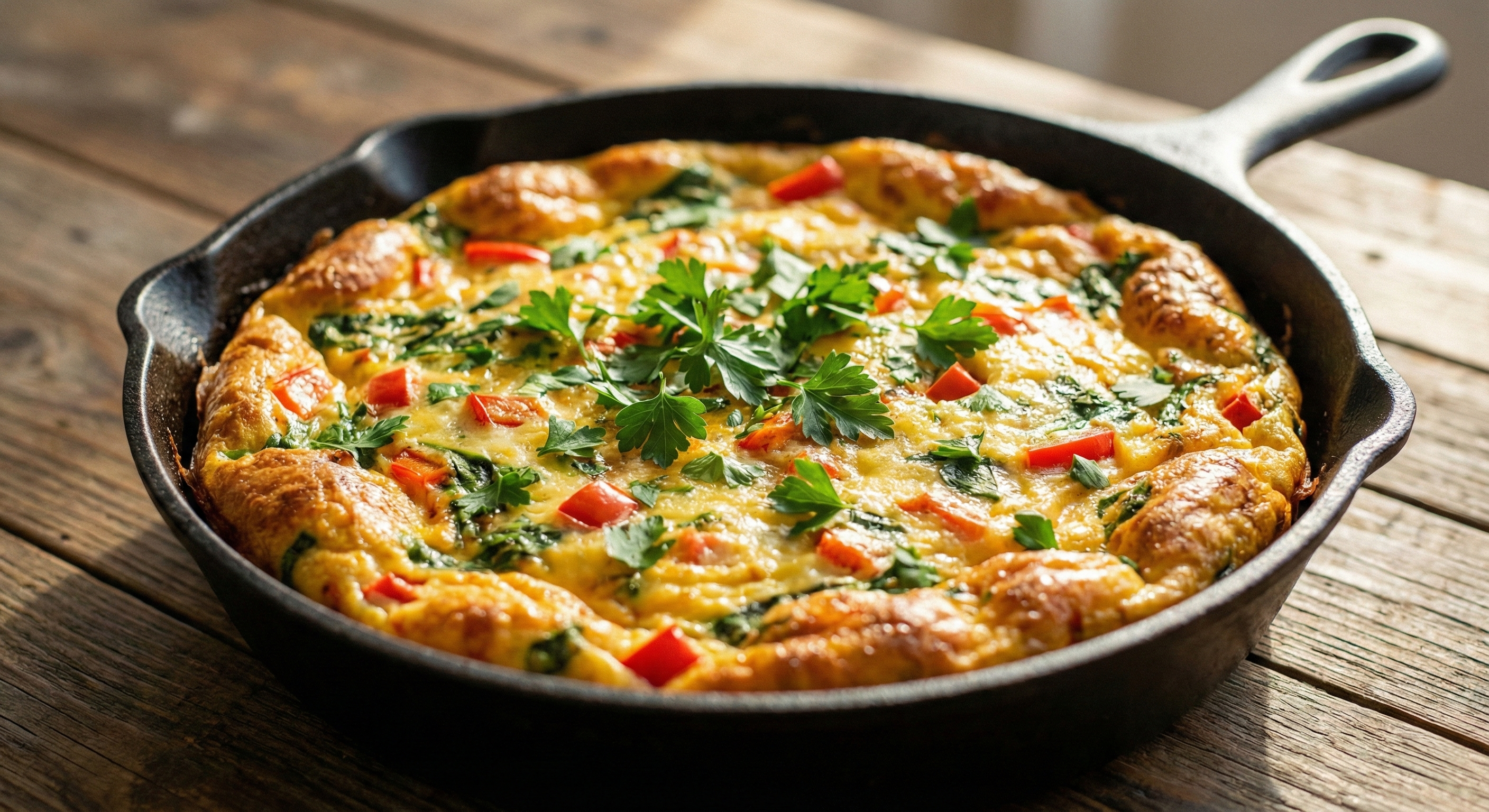
Imagine waking up on a slow Sunday morning. The sunlight is streaming through the kitchen window, and the air is slowly filling with the rich, savory aroma of caramelized onions and sharp, melting cheese. You want a breakfast that feels luxurious—something worthy of a brunch spot—but you don’t want to spend hours standing over the stove flipping individual omelets.
Enter the Frittata.
This Italian egg-based dish is the unsung hero of the culinary world. It is thick, custardy, and packed with flavor. Unlike a quiche, it requires no fussy pastry crust. Unlike an omelet, it feeds a crowd all at once. It is a golden circle of happiness that bridges the gap between a hearty breakfast and a light lunch.
In this guide, we are going to master the art of the Perfect Vegetable Frittata. We will transform humble ingredients—eggs, milk, and vegetables—into a high-protein, gluten-free sensation that creates a melt-in-your-mouth experience with every bite. Grab your whisk; let’s get cooking.
Let’s be honest: breakfast fatigue is real. We often get stuck in a loop of cold cereal, soggy toast, or rushed scrambled eggs that turn out rubbery. You need a recipe that breaks that cycle with minimal effort but maximum reward.
The motivation behind mastering the frittata is simple: freedom and forgiveness.
This dish is incredibly forgiving. If you chop the vegetables a little unevenly? It adds rustic charm. If you let it brown a little too much on top? That’s just extra flavor. It is the ultimate “clean-out-the-fridge” meal. Do you have half a bell pepper, a handful of wilting spinach, and a lonely onion? The frittata accepts them all with open arms. It transforms potential food waste into a gourmet centerpiece.
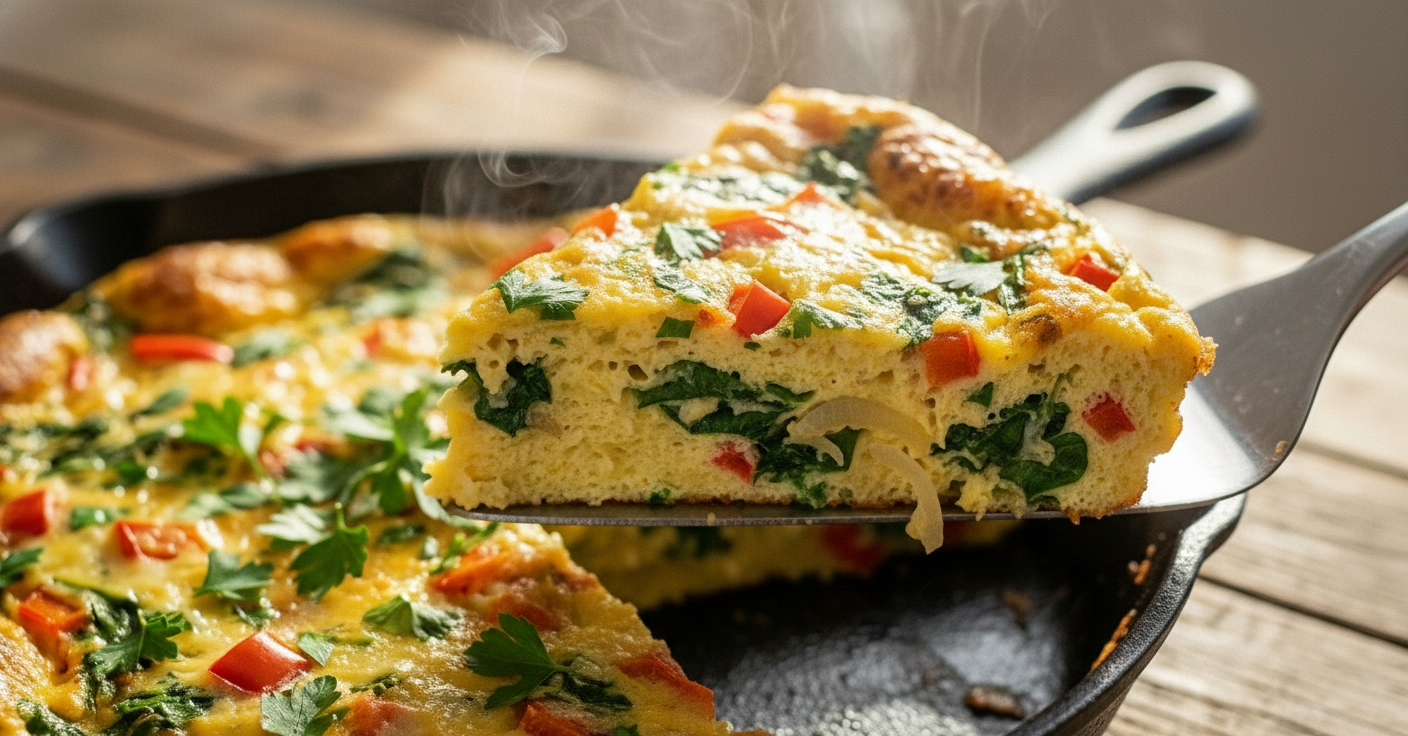
Furthermore, the texture is a motivation in itself. When cooked correctly, the eggs shouldn’t be dry or sponge-like. They should be silky and creamy, held together by the nutty bite of Parmesan cheese. It’s comfort food that fuels you.
Beyond being delicious, this frittata recipe offers immense value to your dietary goals and your culinary skill set.
If you are looking for a High-Protein start to the day, this is it. Eggs are the gold standard for bioavailable protein, essential for muscle repair and keeping you full until lunch. Because we are skipping the crust, this dish is naturally Gluten-Free and low in refined carbohydrates. It’s a keto-friendly dream that doesn’t taste like “diet food.”
The real culinary value here is learning the two-step cooking method. Many home cooks are intimidated by moving a pan from the burner into the oven. This recipe teaches you how to start cooking on direct heat to set the bottom (creating a delicious crust) and finish with radiant heat in the oven to puff up the center. Once you master this technique, you can apply it to steaks, nervous-system-soothing cobblers, and roasted chicken dishes.
Food is rarely just about sustenance; it is about history and connection. The word Frittata comes from the Italian verb friggere (to fry). Historically, this was a dish born of necessity—a staple of cucina povera (peasant cooking). Italian grandmothers would take the previous night’s leftover pasta or roasted vegetables, bind them with eggs, and feed the whole family.
When you make a frittata, you are connecting to that tradition of resourcefulness. But there is also a modern connection: the communal table.
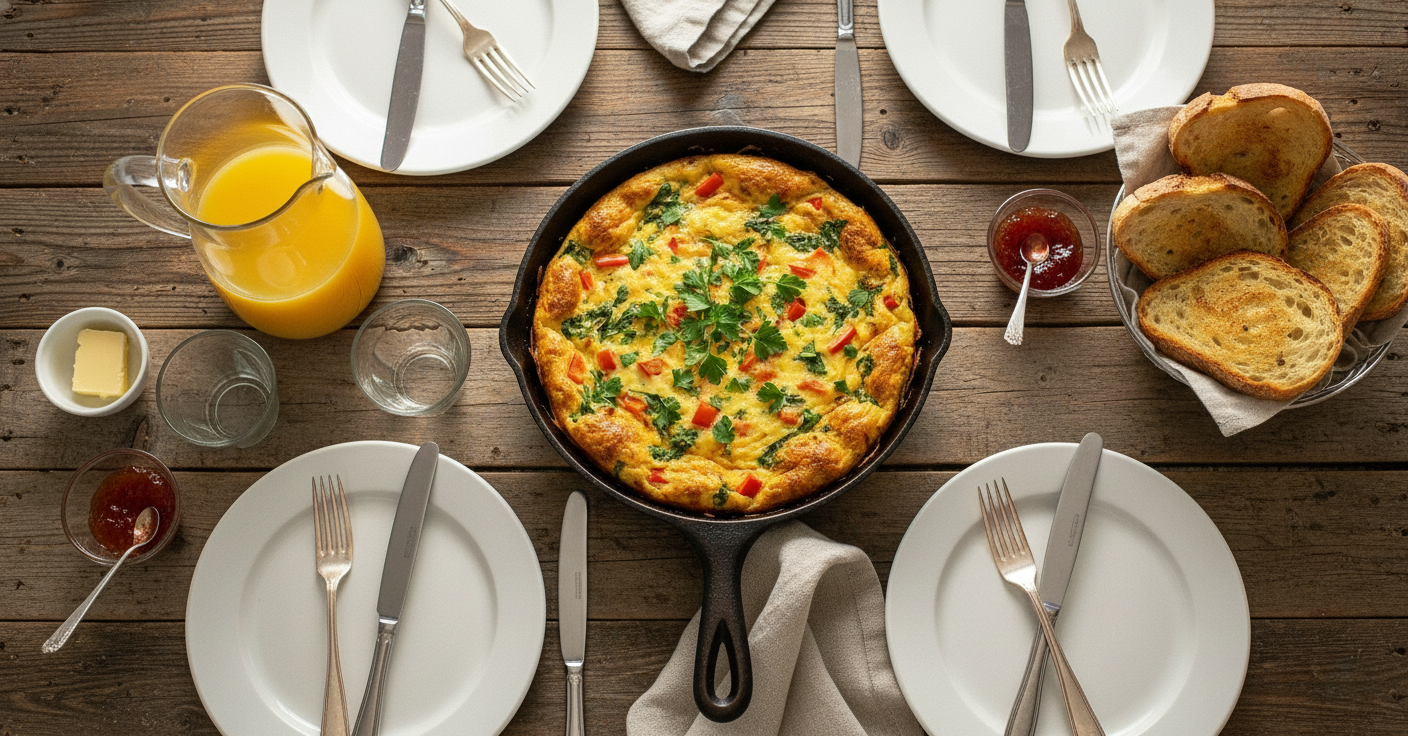
There is something inherently social about a round dish. Just like a pizza or a pie, a frittata is meant to be sliced into wedges and shared. It sits in the center of the table, inviting everyone to take a piece. It sparks conversation. It slows down the rush of the morning. Whether you are serving this for a holiday brunch or a simple Tuesday family breakfast, you are creating a moment of togetherness.
Now, let’s get into the kitchen. The secret to a great frittata is managing the water content of your vegetables and the ratio of dairy to eggs.
The Base:
The Filling (The Vegetable Medley):
Step 1: Preheat and Prep Position a rack in the center of your oven and preheat it to 400°F (200°C). Wash and chop all your vegetables. Consistency is key here—chop the onions and peppers into bite-sized pieces so they cook evenly.
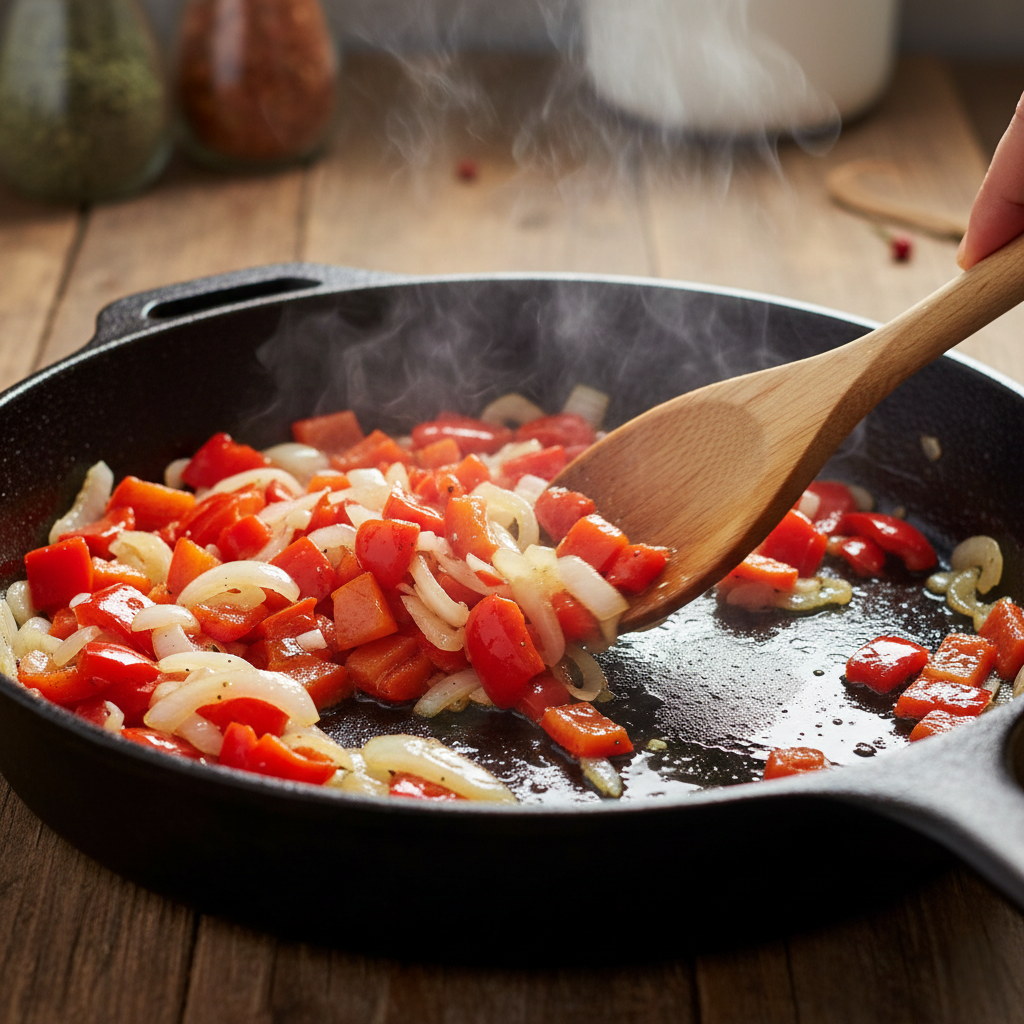
Step 2: The Veggie Sauté Place your skillet over medium heat and add 1 tablespoon of olive oil. Once the oil shimmers, toss in the diced onions and red bell peppers. Why? Vegetables contain a lot of water. If you throw raw veggies into the eggs, that water will release during baking, making your frittata soggy and watery. We want to cook that moisture out. Sauté for about 5–7 minutes until the onions are soft and translucent and the peppers are tender.
Step 3: Wilt the Greens Add the fresh baby spinach to the skillet. It will look like a mountain of greens, but don’t worry—it will shrink rapidly. Stir constantly for about 1 minute until the spinach is fully wilted. Season the veggies with a pinch of salt. Remove the skillet from the heat and let it cool slightly.
Step 4: The Custard Base While the veggies cool, crack the 8 eggs into your large mixing bowl. Pour in the milk, add the grated Parmesan cheese, the 1/2 tsp of salt, and the pepper. Technique Alert: Whisk the mixture vigorously. You want to beat air into the eggs until the color is a uniform pale yellow and you see bubbles on the surface. This air is what makes the frittata fluffy rather than dense.
Step 5: Combine and Cook Add the remaining tablespoon of olive oil to the skillet (if it looks dry) and put it back on medium-low heat. Pour the egg mixture directly over the vegetables in the pan. Do not scramble. Using your spatula, gently distribute the vegetables so they are spread evenly throughout the eggs. Let it cook undisturbed on the stovetop for about 2–3 minutes. The Goal: Look at the edges. You want to see the eggs starting to set and turn pale around the rim of the pan. The bottom is setting into a nice crust, but the top will still be very runny.
Step 6: The Oven Finish Carefully transfer the hot skillet into your preheated oven. Bake for 10 to 14 minutes. Keep an eye on it. The frittata is done when the eggs are puffed up, the center no longer jiggles like liquid (it should have a slight wobble like Jell-O), and the cheese on top is just starting to turn golden brown.
Step 7: The Rest Remove the pan from the oven using a thick oven mitt (the handle will be scorching hot!). Place it on a cooling rack. Crucial Step: Let it rest for 5 minutes. The residual heat finishes the cooking process, and the structure needs time to firm up. If you cut it immediately, it might fall apart.
Step 8: Serve Slice into wedges directly in the pan and serve warm.
Can I make this ahead of time for meal prep? Absolutely. Frittatas are excellent cold or at room temperature. You can bake it on Sunday, slice it up, and store the wedges in the fridge for a quick grab-and-go breakfast throughout the week.
How do I reheat it without making it rubbery? The microwave is the enemy of eggs. If you must use it, do so on 50% power in short bursts. However, the best way to reheat is in a toaster oven or regular oven at 350°F for about 5–10 minutes, covered with foil to keep moisture in.
Can I substitute the milk for a dairy-free option? Yes, you can. Unsweetened almond milk or oat milk works well. The texture might be slightly less creamy than with cow’s milk, but it will still be delicious. Just ensure the milk is unflavored!
My frittata turned out watery. What went wrong? This is almost always due to the vegetables. Vegetables like zucchini, mushrooms, and spinach hold a lot of water. Ensure you sauté them thoroughly to evaporate the moisture before adding the eggs.
How long can I store leftovers? Stored in an airtight container in the refrigerator, your frittata will stay fresh for up to 4 days.
Can I freeze a frittata? Technically yes, but the texture may change. Frozen cooked eggs can sometimes become spongy when thawed and water may separate from the vegetables. It is best enjoyed fresh or refrigerated.
There you have it—the blueprint for the perfect Savory Breakfast Frittata. You have taken simple ingredients found in almost every kitchen and elevated them using the power of heat control and preparation.
This dish is more than just a recipe; it is a canvas. Once you are comfortable with this spinach and pepper version, try experimenting. Roasted potatoes and rosemary? Bacon and cheddar? The possibilities are endless.
So, this weekend, skip the cereal. Preheat your oven, grab that skillet, and treat yourself to a breakfast that nourishes your body and delights your taste buds.
Did you make this recipe? We’d love to see your creation! Snap a photo of your puffy golden masterpiece and tag us on social media using #FarmhouseFrittata. Happy cooking!